

Is a shale layer agent for drilling suitable for all drilling depths?
As a supplier of shale layer agents for drilling, I've spent a significant amount of time exploring the intricacies of these products and their performance across various drilling depths. The question of whether a shale layer agent is suitable for all drilling depths is a complex one that requires a deep understanding of both the agent's properties and the challenges presented at different depths.
Understanding Shale Layer Agents for Drilling
Shale layer agents for drilling play a crucial role in the drilling process. They are designed to address the unique challenges posed by shale formations, such as wellbore instability, fluid loss, and cuttings dispersion. These agents work by forming a protective coating on the wellbore walls, reducing the interaction between the drilling fluid and the shale, and preventing the shale from swelling and crumbling.
There are several types of shale layer agents available on the market, each with its own set of properties and applications. Some of the most common types include Polymer Coating Agent, which provides excellent coating and inhibition properties, and Drilling Fluid for Shale Coating Agent, which is specifically formulated to enhance the performance of the drilling fluid in shale formations.
Challenges at Different Drilling Depths
Drilling at different depths presents a variety of challenges that can affect the performance of shale layer agents. At shallow depths, the primary challenge is often wellbore instability due to the presence of unconsolidated or weakly consolidated shale formations. These formations are prone to sloughing and caving, which can lead to lost circulation, stuck pipe, and other drilling problems.
As the drilling depth increases, the temperature and pressure also increase, which can have a significant impact on the properties of the shale layer agent. High temperatures can cause the agent to degrade, reducing its effectiveness in preventing shale swelling and fluid loss. High pressures can also affect the stability of the wellbore, making it more difficult to maintain a consistent coating on the wellbore walls.
In addition to temperature and pressure, the composition of the shale formation can also vary with depth. Deeper shale formations may contain higher concentrations of clay minerals, which can be more reactive and difficult to control. These formations may also have a higher degree of anisotropy, which can affect the flow of the drilling fluid and the performance of the shale layer agent.
Performance of Shale Layer Agents at Different Depths
The performance of shale layer agents at different depths depends on several factors, including the type of agent, the properties of the shale formation, and the drilling conditions. In general, most shale layer agents are effective at shallow to moderate depths, where the temperature and pressure are relatively low and the shale formations are less complex.

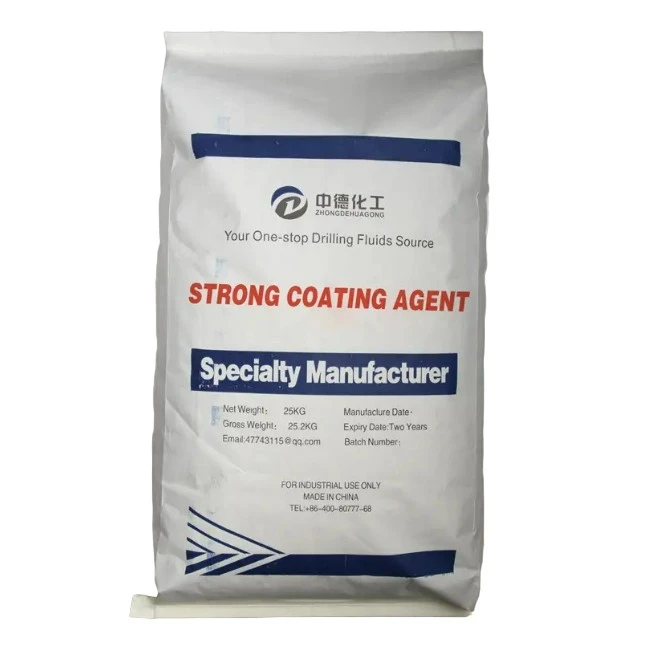
At shallow depths, a Polymer Coating Agent can provide excellent protection against wellbore instability by forming a strong, durable coating on the wellbore walls. This coating helps to prevent the shale from swelling and crumbling, reducing the risk of lost circulation and stuck pipe.
As the drilling depth increases, however, the performance of the shale layer agent may begin to decline. High temperatures and pressures can cause the agent to degrade, reducing its ability to form a protective coating on the wellbore walls. In addition, the more complex nature of deeper shale formations may require a more specialized shale layer agent that is specifically designed to handle these challenges.
For deeper drilling applications, a Drilling Fluid for Shale Coating Agent may be more suitable. These agents are formulated to withstand high temperatures and pressures and provide enhanced inhibition properties in complex shale formations. They may also contain additives that help to improve the stability of the drilling fluid and prevent the formation of filter cakes.
Factors to Consider When Selecting a Shale Layer Agent
When selecting a shale layer agent for a specific drilling application, it is important to consider several factors, including the drilling depth, the properties of the shale formation, the drilling conditions, and the performance requirements of the well. Here are some key factors to keep in mind:
- Drilling Depth: As discussed earlier, the performance of shale layer agents can vary with depth. It is important to select an agent that is suitable for the expected drilling depth and can withstand the temperature and pressure conditions at that depth.
- Shale Formation Properties: The properties of the shale formation, such as its composition, porosity, and permeability, can have a significant impact on the performance of the shale layer agent. It is important to conduct a detailed analysis of the shale formation to determine the most appropriate agent for the job.
- Drilling Conditions: The drilling conditions, such as the type of drilling fluid, the drilling rate, and the wellbore geometry, can also affect the performance of the shale layer agent. It is important to select an agent that is compatible with the drilling fluid and can perform effectively under the specific drilling conditions.
- Performance Requirements: The performance requirements of the well, such as the desired wellbore stability, fluid loss control, and cuttings removal, should also be considered when selecting a shale layer agent. It is important to choose an agent that can meet these requirements and provide reliable performance throughout the drilling process.
Conclusion
In conclusion, while shale layer agents for drilling can be effective in a wide range of applications, they are not suitable for all drilling depths. The performance of these agents depends on several factors, including the type of agent, the properties of the shale formation, and the drilling conditions.
At shallow to moderate depths, most shale layer agents can provide adequate protection against wellbore instability and fluid loss. However, as the drilling depth increases, the challenges become more complex, and a more specialized agent may be required.
As a supplier of shale layer agents for drilling, we understand the importance of selecting the right agent for the job. We offer a wide range of high-quality products that are specifically designed to meet the needs of different drilling applications. Whether you are drilling at shallow depths or in deep, complex shale formations, we can help you find the right shale layer agent to ensure the success of your drilling operation.
If you are interested in learning more about our shale layer agents or would like to discuss your specific drilling needs, please contact us. We look forward to working with you to find the best solution for your drilling challenges.
References
- Smith, J. (2018). Drilling Fluids Technology: A Comprehensive Guide. Gulf Professional Publishing.
- Bourgoyne, A. T., et al. (1986). Applied Drilling Engineering. Society of Petroleum Engineers.
- Chenevert, M. E. (1970). Shale Inhibition by Water Base Drilling Fluids. Journal of Petroleum Technology.