

Carboxymethyl cellulose (CMC) or cellulose gum is a cellulose derivative with carboxymethyl groups (-CH2-COOH) bound to some of the hydroxyl groups of the glucopyranose monomers that make up the cellulose backbone. It is often used in its sodium salt form, sodium carboxymethyl cellulose.CMC is a white or lightly yellow powder with no odor, flavor, or poisonous properties. It is hygroscopic and dissolves well in hot or cold water, forming a viscous solution. It is not soluble in organic solvents like methanol, ethanol, acetone, chloroform, and benzene. The functional properties of CMC depend on the degree of substitution of the cellulose structure (i.e., how many of the hydroxyl groups have been converted to carboxymethylene groups in the substitution reaction), as well as the chain length of the cellulose backbone structure and the degree of clustering of the carboxymethyl substituents.
Viscosity Control
CMC is primarily used to adjust the viscosity of drilling fluids. It helps in forming a gel-like structure that enhances the suspension of drill cuttings, preventing them from settling at the bottom of the wellbore. This property is crucial for maintaining clean boreholes and efficient drilling operations. The high-viscosity grades of CMC are particularly effective in creating a viscous fluid that can carry cuttings to the surface more effectively.
Filtration Control
CMC plays a vital role in controlling fluid loss during drilling. It reduces the permeability of the filter cake formed on the wellbore walls by creating a thin, low-permeability layer. This action minimizes the invasion of drilling fluid into the surrounding formations, preserving the integrity of the wellbore and preventing potential damage to hydrocarbon-bearing zones. Low-viscosity CMC is often used for its superior filtration control properties.
Lubrication
The lubricating properties of CMC enhance the performance of drilling fluids, reducing friction between the drill string and the wellbore. This reduction in friction decreases the torque and drag on the drill string, leading to smoother drilling operations and minimizing wear and tear on drilling equipment.
Shale Stabilization
CMC helps in stabilizing shale formations encountered during drilling. It acts as a protective colloid, forming a barrier on the surface of shale particles and preventing their hydration and disintegration. This stabilization is crucial in preventing wellbore instability, which can lead to problems such as hole collapse and stuck pipe incidents.
Temperature Stability
CMC exhibits good thermal stability, maintaining its functional properties over a wide range of temperatures encountered in downhole conditions. This stability ensures consistent performance of the drilling fluid even in high-temperature environments, making it suitable for deep and geothermal wells.
-
![Textile-grade CMC]() Textile-grade CMCProduct Introduction Sodium carboxymethyl cellulose is produced by reacting alkali cellulose with chloroacetic acid or its sodium salt. The etherification reaction mainly occurs at the primaryread more
Textile-grade CMCProduct Introduction Sodium carboxymethyl cellulose is produced by reacting alkali cellulose with chloroacetic acid or its sodium salt. The etherification reaction mainly occurs at the primaryread more -
![Ultra-low Viscosity CMC For Thermal Sublimation Applications]() Ultra-low Viscosity CMC For Thermal Sublimation ApplicationsUltra-low viscosity CMC for thermal sublimation applications Ultra-low viscosity CMC is a special form of carboxymethyl cellulose sodium (CMC-Na), featuring low viscosity, good water solubility, andread more
Ultra-low Viscosity CMC For Thermal Sublimation ApplicationsUltra-low viscosity CMC for thermal sublimation applications Ultra-low viscosity CMC is a special form of carboxymethyl cellulose sodium (CMC-Na), featuring low viscosity, good water solubility, andread more -
![Sodium Carboxymethyl Cellulose]() Sodium Carboxymethyl CelluloseCMC with high viscosity and high degree of substitution is suitable for mud with low density, and CMC with low viscosity and high degree of substitution is suitable for mud with high density. CMCread more
Sodium Carboxymethyl CelluloseCMC with high viscosity and high degree of substitution is suitable for mud with low density, and CMC with low viscosity and high degree of substitution is suitable for mud with high density. CMCread more -
![Carboxymethylcellulose for Oil Drilling]() Carboxymethylcellulose for Oil DrillingSodium carboxymethyl cellulose (CMC) belongs to anionic cellulose ethers, with the appearance of white or yellowish flocculent fiber powder or white powder, odorless, tasteless and non-toxic; Easilyread more
Carboxymethylcellulose for Oil DrillingSodium carboxymethyl cellulose (CMC) belongs to anionic cellulose ethers, with the appearance of white or yellowish flocculent fiber powder or white powder, odorless, tasteless and non-toxic; Easilyread more -
![Cmc Mv Drilling Fluid White Powder]() Cmc Mv Drilling Fluid White PowderCarboxymethyl cellulose (CMC) is a non-toxic and tasteless white flocculent powder with stable performance and easy solubility in water. Its aqueous solution is neutral or alkaline transparentread more
Cmc Mv Drilling Fluid White PowderCarboxymethyl cellulose (CMC) is a non-toxic and tasteless white flocculent powder with stable performance and easy solubility in water. Its aqueous solution is neutral or alkaline transparentread more -
![Cosmetic Grade Carboxymethylcellulose]() Cosmetic Grade CarboxymethylcelluloseCosmetic-grade CMC is commonly used in skincare products such as lotions, creams, and gels to increase viscosity, improve emulsification, and stabilize formulations. Its thickening properties alsoread more
Cosmetic Grade CarboxymethylcelluloseCosmetic-grade CMC is commonly used in skincare products such as lotions, creams, and gels to increase viscosity, improve emulsification, and stabilize formulations. Its thickening properties alsoread more -
![Petroleum Grade Carboxymethylcellulose]() Petroleum Grade CarboxymethylcellulosePetroleum grade carboxymethyl cellulose is an industrial chemical that contains highly purified carboxymethyl cellulose. It is mainly used as a drilling fluid additive in the petroleum industry.read more
Petroleum Grade CarboxymethylcellulosePetroleum grade carboxymethyl cellulose is an industrial chemical that contains highly purified carboxymethyl cellulose. It is mainly used as a drilling fluid additive in the petroleum industry.read more


Why Choose Us
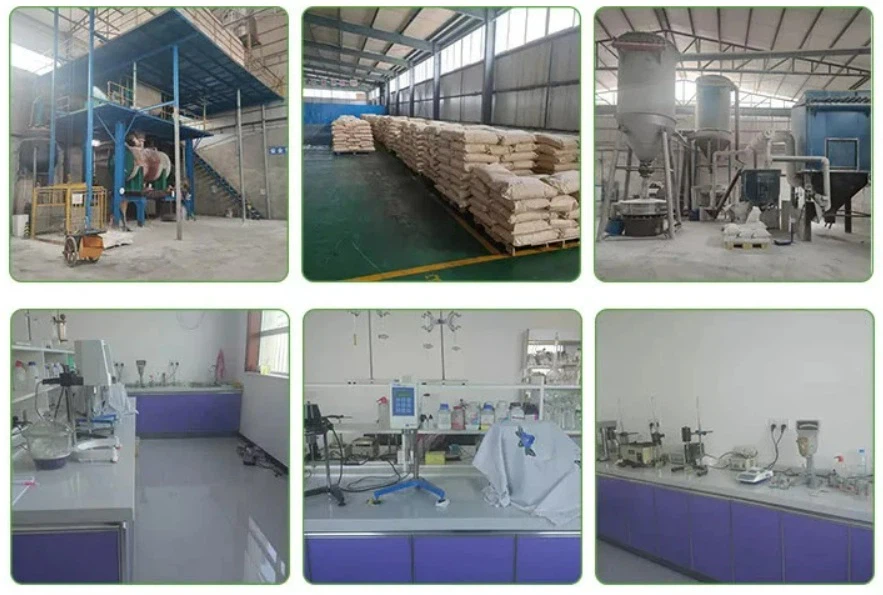
Our Factory
Wen'an Zhongde Chemical Co., Ltd. Founded in January 2010, it is located in the south of Beijing, the capital of China, 150 kilometers west of Tianjin Xingang. The company has advanced production equipment, the most mature production technology and modern standardized testing equipment, and testing methods meet international standards. Our products have passed the ISO9001: 2008 quality system certification, and the product quality has reached the international leading level.
Our Product
Carboxymethyl cellulose (CMC-HV, CMC-LV), polyanionic cellulose (PAC-LV, PAC-R, PAC-HV), hydroxypropyl methyl cellulose (HPMC), polyacrylamide (PAM, CPAM, APAM, NPAM),Sodium polyacrylate, carboxymethyl starch (CMS), high-temperature resistant starch for oil drilling, xanthan gum, shale inhibitor, sulfonated asphalt powder, anti sloughing agent white asphalt, plugging agent while drilling, guar gum Lubricants and detergents for drilling fluids, coating agents for drilling fluids.
Application & Market
Oil drilling construction wastewater treatment food textile printing and dyeing heat transfer.Nigeria, the United States, Japan, Russia, Türkiye, France, Pakistan, India... They come to our company for inspection and guidance.
Service Purpose
1. Fast, decisive, accurate, thoughtful and thorough
2. Service objective: Service quality to win customer satisfaction
3. Service efficiency: Solve product doubts and problems for customers in the first time.
Carboxymethyl cellulose CMC Uses In Food
Carboxymethyl cellulose CMC Uses is extensively utilized in the food industry due to its multifunctional properties. It serves as a thickening agent in sauces, soups, and dairy products, enhancing their texture and mouthfeel. As a stabilizer, it prevents ingredient separation in emulsions such as salad dressings and beverages. CMC e466 is also employed as a film-forming agent in candy and baked goods coatings, improving appearance and extending shelf life.
In low-fat and reduced-fat foods, sodium CMC acts as a fat replacer, providing a texture and mouthfeel similar to that of fats. It is crucial in frozen desserts like ice cream, where it prevents ice crystal formation and enhances creaminess.
In beverages and condiments, CMC cellulose helps maintain the suspension of solid particles, ensuring consistent quality.
Furthermore, carboxymethyl cellulose sodium retains moisture in baked goods and processed meats, enhancing texture and extending shelf life. It is also an essential ingredient in gluten-free baking, where it replaces gluten to improve the structure and texture of baked products.
Carboxymethyl cellulose CMC Uses In Medicine
Sodium carboxymethylcellulose (CMC) is a highly valued ingredient in the medical industry due to its versatility, safety, and functional properties.
●Pharmaceutical Formulations: Carboxymethyl cellulose sodium acts as a thickening agent and stabilizer in liquid medications like syrups and oral suspensions. It ensures the right consistency and uniform distribution of active ingredients.
●Controlled Drug Release: In the development of controlled-release drug delivery systems, CMC E466 is utilized in matrix tablets and hydrogels. It effectively controls the release rate of active pharmaceutical ingredients. This ensures a steady and prolonged therapeutic effect.
●Eye Drops: CMC (carboxymethyl cellulose) is a key ingredient in artificial tears and other ophthalmic solutions. It relieves dryness and irritation by forming a protective, lubricating film over the eye surface. Its viscosity-enhancing properties ensure prolonged contact time with the eye, enhancing its effectiveness in providing relief.
●Tablet and Capsule Manufacturing: In solid dosage forms, sodium CMC serves as a binder, aiding tablets in maintaining their shape. Additionally, it acts as a disintegrant, facilitating the breakdown of tablets in the digestive tract to ensure efficient release of active ingredients.
●Personal Care Medical Products: Carboxymethyl cellulose sodium is included in medical toothpaste and mouthwashes to provide the right consistency and stability. This enhances the effectiveness and user experience of these products.
Carboxymethyl cellulose CMC Uses In Cosmetics
Sodium carboxymethyl cellulose (CMC) is widely used in cosmetics for its versatile properties. It serves as a thickening agent, stabilizer, film former, suspension agent, binding agent, and moisture retainer in cosmetics.
●Thickening Agent: Increases the viscosity of lotions, creams, and gels, providing a smooth texture.
●Stabilizer: Maintains uniform distribution of ingredients, preventing separation and extending shelf life.
●Film Forming Agent: Forms a protective film on skin or hair, enhancing product performance and feel, as in facial masks and hair gels.
●Moisture Retention: Excellent water-binding properties help retain moisture in moisturizers and hydrating serums.
●Improved Texture and Feel: Enhances the smoothness and spreadability of makeup products and cleansers.
●Binding Agent: Ensures ingredients stick together and maintain product integrity, useful in powder products and tablets.
What Is the Difference Between HPMC and CMC
HPMC
●Chemical structure: HPMC is a semi-synthetic polymer compound obtained by reacting natural cellulose with propylene oxide and methyl chloride after alkali treatment.
The main structural unit is the glucose ring, which is connected by 1,4-β-glucosidic bonds, and some hydroxyl groups are replaced by methoxy (-OCH₃) and hydroxypropyl (-CH₂CHOHCH₃).
●Preparation method: First, cellulose is treated with sodium hydroxide solution to form alkali cellulose, then reacted with methyl chloride and propylene oxide, and finally neutralized, washed and dried to obtain HPMC.
CMC
●Chemical structure: CMC is an anionic cellulose derivative obtained by reacting cellulose with chloroacetic acid under alkaline conditions.
The main structural unit is also a glucose ring, connected by 1,4-β-glucosidic bonds, and some hydroxyl groups are replaced by carboxymethyl (-CH₂COOH).
●Preparation method: Cellulose reacts with sodium hydroxide to form alkali cellulose, which then reacts with chloroacetic acid, and finally neutralizes, washes and dries to obtain CMC.
Solubility
●HPMC: Soluble in cold water and some organic solvents, insoluble in hot water. When the solution is cooled, a transparent gel can be formed.
●CMC: Soluble in cold water and hot water to form a viscous colloidal solution.
Viscosity and rheology
●HPMC: Has good thickening effect and suspension stability in aqueous solution, and has pseudoplastic (shear thinning) rheological properties.
●CMC: Has high viscosity and good rheological properties in aqueous solution, showing thixotropy (thickening when stationary, thinning when stirred) and pseudoplasticity.
HPMC
●Food industry: As thickener, stabilizer, emulsifier and film former, used in ice cream, dairy products, jelly, etc.
●Pharmaceutical industry: Used as binder, disintegrant and controlled release agent for tablet preparation.
●Building materials: Used in cement mortar and gypsum products to improve water retention and workability.
●Cosmetics and personal care products: Used in lotions, creams, shampoos and shower gels, etc., to provide thickening and stabilizing effects.
CMC
●Food industry: As thickener, stabilizer and emulsifier, used in jam, jelly, ice cream and beverages.
●Pharmaceutical industry: Used as binder, disintegrant for pharmaceutical tablets and film former for pharmaceutical capsules.
●Papermaking industry: Used as wet strength agent and surface sizing agent to improve the dry strength and printability of paper.
●Textile industry: Used as sizing agent and finishing agent to improve the strength and gloss of fabrics.
●Daily chemical industry: Used as thickener and stabilizer for detergents, toothpaste and skin care products.
Both HPMC and CMC are non-toxic and non-irritating polymer materials that cannot be decomposed by digestive enzymes in the human body and are generally considered safe food additives and pharmaceutical excipients. They are easily degraded in the environment and have little pollution to the environment.
HPMC is mainly used in fields with high performance requirements due to its complex preparation process, relatively high production cost and high price.
The production process of CMC is relatively simple, the cost is low, the price is relatively economical, and the application range is wide.
Carboxymethyl cellulose CMC is one of cellulose ether made by natural fibre-refined cotton and wood pulp. It can be widely used in food, detergent, paper making, ceramic and mining industries etc. But there are more than 80 types CMC based on different purity, viscosity and degree of substitution (D.S), etc.
1. For food grade carboxymethyl cellulose CMC, we can only focus on the pH of your foods, such as yogurt, acid drinks. If the pH is less than 5, you should choose the acid-resistant type CMC. Otherwise, normal type is ok.
2. For detergent grade carboxymethyl cellulose CMC, you need to confirm if you will use CMC in powder detergent or liquid detergent. If it's powder detergent is the production method high tower spray drying method? If it's liquid detergent, is it laundry detergent or industrial detergent? The purity should be above 99.5% if it's used in laundry detergent. Otherwise, the purity above 90% is ok for industrial detergent.
3. For carboxymethyl cellulose CMC used in paper making industry, you should confirm if it's used as wet end additive to increase paper strength or coated paper as sizing agent. If it is used as sizing agent, the coating speed is very important. For high coated speed, it's better to choose coarse CMC with high D.S.
4. For carboxymethyl cellulose CMC used in ceramic industry, you need to confirm if it's used in ceramic body or ceramic glaze. if it was used in ceramic glaze, the coarse CMC with D.S above 0.9 is the best choice.
5. For carboxymethyl cellulose CMC used in mining industry, you need to confirm which type of mine it is. CMC is widely used in platinum mine – You could use our coarse (granular) CMC with high D.S and high purity for this mine.

Carboxymethyl Cellulose occupies a large proportion in the paper industry. It has outstanding use characteristics and strong adaptability, so it can be widely used in the paper industry, and it will also have impact on the quality of the paper.
First of all, carboxymethyl cellulose is a very good dispersing agent. After it is dissolved and added to the pulp suspension, it can make the pulp fibers and the particles of the filler affinity, so that the negative charge of the negatively charged pulp fibers and filler particles can be increased. The fibers and fillers in the pulp suspension can be dispersed more uniformly according to the repulsion of same charged particles. Carboxymethyl Cellulose can mainly improve the uniformity of the paper sheet which is also one of the ways to improve the strength of the paper.
When carboxymethyl cellulose enters the wet end paper, the carboxymethyl group reacts with the hydroxyl groups on the fibers, which can increase the bonding force between fibers. After a series of processing, the adhesion between fibers can be improved. It will directly increase the physical strength of the paper.
Carboxymethyl cellulose has the function of sizing in the pulp. On the one hand, it gives the paper a certain degree of sizing, and it is also the protective colloid for rosin and other sizing agents, which can promote them to disperse into the particles and evenly distributed on the fibers, delaying the hydrolysis rate of the protective colloid and reducing the possibility of contamination by hydrolyzed garbage.
Because carboxymethyl cellulose is easy to have affinity with fine fibers and filler particles, if appropriate cationic additives are used together, a good synergistic effect will be obtained, which directly makes the effect of the additives more significant.
In a word, carboxymethyl cellulose is used as a dispersant with outstanding characteristics in the paper making industry, thereby improving the uniformity of the paper, improving the strength of the paper, reducing the possibility of hydrolyzed garbage pollution, and increasing its using
The Method to Prevent Caking When Dissolving Carboxymethyl Cellulose CMC
CMC is odorless and tasteless white or cream-fine powder. The viscosity of CMC rises rapidly below 20℃; The change in viscosity is slower at 45℃; The viscosity and performance of CMC decrease significantly when the temperature is above 80℃. It is very stable in alkaline solution but is easy to hydrolyze in acid environment. When the pH value is 2-3 or it is in contact with polyvalent metal salt, precipitation will occur. CMC is easy to disperse in water into transparent gelatin solution, and is insoluble in ethanol and other organic solvents.
Some customers may find it challenging when dissolving CMC. Below are some of the tips when dissolving CMC in water for your reference.
Firstly, add a certain amount of clean water into the mixing tank with a stirring device. Then turn on the stirring device and slowly and evenly scattered CMC into the mixing tank. Keep stirring so that CMC and water are completely integrated and CMC is fully dissolved. The reason why we need to evenly scatter CMC and keep stirring is to prevent CMC from clumping and caking when it meets with water. This could also improve the dissolving rate of CMC. The stirring time is normally much shorter than the time CMC completely dissolves.
The basis for determining the stirring time is when CMC is evenly dispersed in water with no obvious large lumps. The stirring speed is generally between 600-1300RPM, and the stirring time is usually controlled within about an hour.
The time required for the complete dissolution of CMC can be determined based on the following aspects:
(1) CMC is completely bonded to water, and there is no solid-liquid separation between CMC and water;
(2) The mixed glue is in a uniform state, and the surface is smooth;
(3) The mixed glue is close to transparent with no granular substance. It takes about 10-20 hours from the time CMC is put into the mixing tank to CMC is completely dissolved.
Our Factory
Wen'an Zhongde Chemical Co., Ltd. Founded in January 2010, it is located in the south of Beijing, the capital of China, 150 kilometers west of Tianjin Xingang. The company has advanced production equipment, the most mature production technology and modern standardized testing equipment, and testing methods meet international standards. Our products have passed the ISO9001: 2008 quality system certification, and the product quality has reached the international leading level.


FAQ
We're professional carboxymethyl cellulose cmc manufacturers and suppliers in China, specialized in providing high quality customized service. We warmly welcome you to buy high-grade carboxymethyl cellulose cmc in stock here from our factory.
cmc mv drilling fluid white powder, carboxymethylcellulose for oil drilling, cosmetic grade carboxymethylcellulose