

Strong coating agents are essential in modern industry to improve product quality and extend their service life. These reagents are chemical compounds that improve the physical, chemical, and mechanical properties of surfaces by providing them with an elastic and durable protective layer.Most strong coatings are used on metals, plastics, ceramics, and other surfaces that require environmental protection. These coatings are resistant to corrosion, abrasion, and chemical attack.There are many benefits to using strong coatings, including improved product durability, resistance to harsh environments, and ease of maintenance. Coating agents also make the product look more aesthetically pleasing.
Advantages of Strong Coating Agent
Corrosion Protection
Strong coating agent can protect metal surfaces from corrosion, extending the lifespan of equipment, structures, and components.
Improved Appearance
Strong coating agent can enhance the aesthetics of products by providing a uniform, smooth, and glossy finish.
Wear Resistance
Strong coating agent can increase the wear resistance of surfaces, making them more durable and longer-lasting.
Insulation
Strong coating agent can provide thermal or electrical insulation, improving the efficiency and safety of industrial processes.
Chemical Resistance
Strong coating agent can protect against exposure to chemicals, acids, or solvents, making them suitable for harsh environments.
Customization
Strong coating agent can be tailored to meet specific requirements, such as color, texture, or specific performance characteristics.
Cost-effectiveness
In many cases, the application of strong coating agent can be more cost-effective than replacing or repairing uncoated components.
Environmental Benefits
Strong coating agent can improve energy efficiency or reduce the environmental impact of industrial processes.
-
![Drilling Fluid for Shale Coating Agent]() Drilling Fluid for Shale Coating AgentShale coatings are one of the key components of drilling fluid systems. Its main function is to form a durable and stable coating on shale, which improves the lubricity of the fluid and helps preventread more
-
![Drilling Fluid for Shale Inhibitor]() Drilling Fluid for Shale InhibitorThe coating agent is white particles or powder. The coating agent is a high molecular polymer formed by copolymerization of derivatives of different functional groups, which is a high molecularread more
-
![Sand Carrying Thickener for Oil Drilling]() Sand Carrying Thickener for Oil DrillingThe coating agent is white particles or powder. The coating agent is a high molecular polymer formed by copolymerization of derivatives of different functional groups, which is a high molecularread more
-
![Drilling Fluid for Anti Collapse Agent]() Drilling Fluid for Anti Collapse AgentDrilling fluids are an important part of the oil and gas industry and play an important role in ensuring the safety and efficiency of drilling operations. An essential property of a drilling fluid isread more
-
![Drilling Fluid for Sediment Coating Inhibitors]() Drilling Fluid for Sediment Coating InhibitorsDrilling fluids play a vital role in lubricating and cooling drill bits, transporting cuttings to the surface, and maintaining borehole stability. But drilling fluids also play an important role inread more
-
![Shale Layer Agent for Drilling]() Shale Layer Agent for DrillingA shale formation reagent is a specialized fluid or additive designed to mitigate the effects of shale during drilling. It covers shale particles and prevents them from entering the drilling fluid,read more
-
![Polymer Coating Agent]() Polymer Coating AgentPolymer coating agents are essential in modern industry to improve product quality and extend their service life. These reagents are chemical compounds that improve the physical, chemical, andread more


Why Choose Us
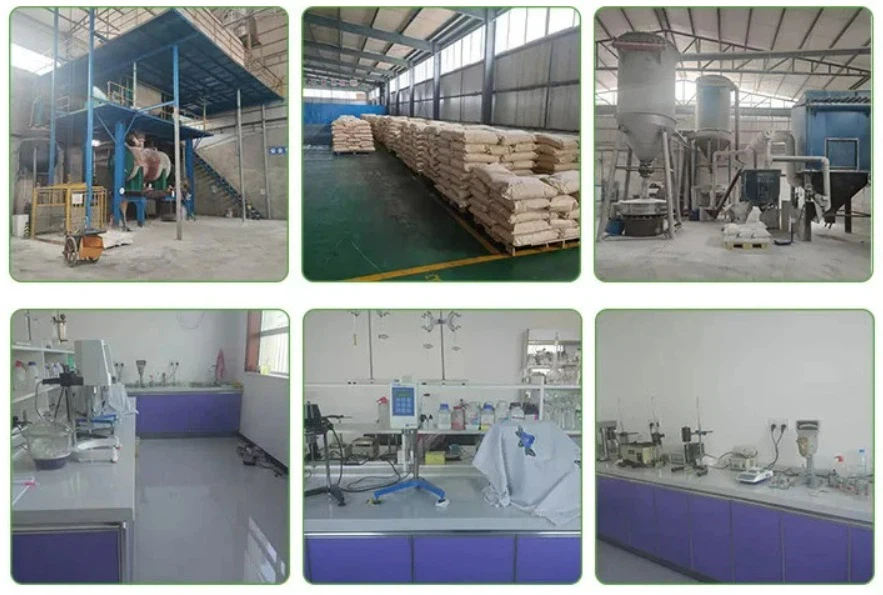
Our Factory
Wen'an Zhongde Chemical Co., Ltd. Founded in January 2010, it is located in the south of Beijing, the capital of China, 150 kilometers west of Tianjin Xingang. The company has advanced production equipment, the most mature production technology and modern standardized testing equipment, and testing methods meet international standards. Our products have passed the ISO9001: 2008 quality system certification, and the product quality has reached the international leading level.
Our Product
Carboxymethyl cellulose (CMC-HV, CMC-LV), polyanionic cellulose (PAC-LV, PAC-R, PAC-HV), hydroxypropyl methyl cellulose (HPMC), polyacrylamide (PAM, CPAM, APAM, NPAM),Sodium polyacrylate, carboxymethyl starch (CMS), high-temperature resistant starch for oil drilling, xanthan gum, shale inhibitor, sulfonated asphalt powder, anti sloughing agent white asphalt, plugging agent while drilling, guar gum Lubricants and detergents for drilling fluids, coating agents for drilling fluids.
Application & Market
Oil drilling construction wastewater treatment food textile printing and dyeing heat transfer.Nigeria, the United States, Japan, Russia, Türkiye, France, Pakistan, India... They come to our company for inspection and guidance.
Service Purpose
1. Fast, decisive, accurate, thoughtful and thorough
2. Service objective: Service quality to win customer satisfaction
3. Service efficiency: Solve product doubts and problems for customers in the first time.
Coating Materials
Coating materials in this standard are compounds that harden without the need for heat. This group of materials is applied in various ways, including the use of brushes, rollers, sprays, trowels and combs on concrete surfaces in one or more layers. Those materials can be applied without solvent or with solvent.
Penetrating Materials
Waterproofing materials are often based on low viscosity epoxy resins. These materials easily penetrate into concrete surfaces or in other words are easily absorbed by concrete and cement surfaces. They are used to create hard concrete floor surfaces in industrial flooring, increase the wear resistance of concrete and also dustproof concrete surfaces.
Primers
Primers are used to seal the porosity of concrete surfaces. Primers are the mainstay of coatings that will be applied later. Primers are made of low-viscosity resin materials that often contain solvents or reactive diluents. They can be selected as needed based on resins other than resins that are later applied as intermediate and final layers. As needed, primers can be applied in one or more layers. It is recommended to apply silica powder on the newly applied primer and it has not hardened yet to create a mechanical bonding between the concrete primer and the subsequent layers. If using an asphalt trowel system, the need for bitumen primer or resin with high thermal resistance is recommended.
Intermediate Layers
The middle layer is used to level the concrete surfaces and also to fill the pores in the concrete. At the same time, the middle layers are used as a layer that prevents the subsequent layers of the coating system from reacting with the substrate, for example, if the subsequent layers of the coating system are based on eruption resins or phenol-formaldehyde. The presence of acid catalysts to harden the above resins causes corrosion of the concrete surface under the work, so it is necessary to apply an intermediate layer as an intermediate layer. Intermediate layers, like primers, can be selected from resins other than those used in the next layer.
Trowel Covers
Trowel coatings can be applied in one or more layers depending on the type of resin used in them. These types of coatings can be hard and brittle or soft.
Self-levelling Coatings
This group of coatings can be applied in one or more layers. Self-levelling coatings are created by pouring material on surfaces that spread and level themselves. The above coatings can also be hard or soft depending on the resin used in them.
Fibre-Reinforced Coatings
Reinforced coatings consist of one or more layers of fibres impregnated with resins listed in the table. The thickness of each layer depends on the type of reinforcing material and its weight and the total thickness of the coating depends on the number of reinforcing layers used. It is recommended that the resin used to saturate all reinforcing layers be the same.
Final Coatings
The final coatings in one or more layers of the same resin base used in the reinforced layer or a more durable resin base are applied on the fibre-reinforced layer. Undiscovered roving fibres can also be used in the final coating applied to the reinforced layer. These fibres are pressed on the last layer of the reinforced coating by a roller and then impregnated with the final coating resin. If the final coatings are applied directly to the primer, they will also be responsible for the sealing layer.
Sealing Layers
Asphalt-based piles are made impermeable by a sealing layer. These layers are made of bituminous sheets with metal or polymer backing, composed the ingot layer is a fully compacted layer that is applied on concrete surfaces in order to achieve high chemical and mechanical resistance, which are divided into two categories: resin and asphalt. In resin ingots, a resin bonding agent is used along with various granulations of silica powder.
What is the working principle of strong coating agent? The working principle of strong coating agent is that a thin layer of strong coating agent is deposited on the surface of the material. In this process, the strong coating agent material is heated up to the point where it becomes pliable and can be applied on the surface of the material. The working principle of strong coating agent has many advantages over other methods of coating. It has high thermal conductivity, which means that it can heat up to very high temperatures with little resistance.
The main function of a strong coating agent is to protect the underlying metal. The pvd process is one of the most important coating methods in modern industry. It is used in a wide range of applications including electrical, electronic, medical, and optical coatings. In the pvd method, a thin layer of metal (called a primer) is deposited on top of a substrate (usually steel).
Ion sputtering is a technique in which an electrical charge accelerates ions to high velocity and transfers them to a target. It has proven to be a very effective method of coating thin films and materials. Ion sputtering can be used to coat a wide variety of materials, including polymers, metals, ceramics and semiconductors. The main advantages of ion sputtering include controllable properties such as fast deposition rates and surface morphology.

4 Things to Know About Strong Coating Agent
Environmental Benefits
In today's world, environmental responsibility is a top priority for industries across the board. Strong coating agent has gained recognition for its eco-friendly advantages. Have made significant strides in creating strong coating agentsystems that reduce pollution and waste. This is achieved through various means, such as more efficient material utilization, reduced toxic byproducts, and decreased energy consumption.
By opting for strong coating agent, companies can minimize their environmental impact while still enjoying the benefits of a durable and attractive finish for their products. It's a win-win situation for both the industry and the environment.
Customization Options
Every product is unique, and so are its coating requirements. The flexibility of strong coating agenttechnology allows for customization to meet specific needs. Technology company offer a range of services that can be tailored to individual preferences and industry requirements. Whether it's a jewelry metal chain or a precision mold, strong coating agent can be fine-tuned to deliver the desired properties.
Customization extends beyond just the type of coating. It can also include the thickness of the coating, the color, and even the texture. This adaptability ensures that strong coating agent can be seamlessly integrated into various manufacturing processes.
High Quality Results
When it comes to surface finishes,strong coating agent stands out for its exceptional quality. It provides a layer of protection that is not only visually appealing but also durable. The high hardness and wear resistance of strong coating agent surfaces make them ideal for industries like watchmaking, the 3c industry, hardware, and precision molds.
Products that undergo strong coating agent exhibit improved corrosion resistance and extended lifespans, ultimately reducing maintenance costs. This high quality and durability make strong coating agent a smart investment for industries seeking long-term performance.
Efficient Delivery Time
In manufacturing, time is money. The strong coating agent process can be a pivotal step in the production line, and it's crucial to keep downtime to a minimum. Strong coating agent equipment, is designed with reduced cycle times in mind. These machines are equipped with features that optimize the coating process, ensuring a swift and efficient operation.
The ability to streamline the coating process, from preparation to application, minimizes production delays. This efficiency contributes to improved productivity, meeting tight deadlines, and ultimately enhancing the bottom line.
Application of Strong Coating Agent
Decorative coatings
Strong coating agent are often used in the creation of aesthetically pleasing, durable, and corrosion-resistant finishes on products like jewelry, watches, and architectural hardware.
Aerospace and automotive
The aerospace and automotive industries rely on strong coating agent to enhance the performance and durability of critical components, including engine parts, pistons, and landing gear.
Medical devices
Surgical instruments and medical implants benefit from strong coating agent as they offer biocompatibility and wear resistance.
Optical coatings
Strong coating agent is used to create anti-reflective, anti-scratch, and uv-protective coatings on eyeglasses, camera lenses, and telescopes.
Properties of Polymer Coating Agent
Polymeric coatings find a very wide range of applications, from paints for bridges and ships to encapsulants for electronic circuits. In all these applications one of the fundamental aims of the polymer is to provide protection of the substrate from the effects of water, oxygen or other harmful fluids.
For instance, for a polymer coating to provide a metal surface with good resistance to corrosion it must fulfil several roles. Since corrosion occurs at the metal surface only in the presence of water, oxygen and ionic impurities, the coating must be highly impermeable to all of these agents. Consequently, the polymers used are highly crosslinked and contain a high concentration of filler particles to reduce oxygen and water permeabilities. Additionally, the polymers should contain few polar or ionic groups which could interact with water and subsequently lead to swelling of the polymer and so increase its permeability. Furthermore, low permeability to ions, such as those of sodium and chlorine, is also achieved by the polymer having few easily polarizable groups, thus ensuring a low dielectric constant. Whilst there still remains some uncertainty regarding the relative importance of water, oxygen or ionic permeability through the coating, it is generally acknowledged that the adhesion between the coating and the metal surface is often of decisive importance. Much work still remains to be done to better understand the relationship between polymer permeability and surface adhesion.
The wide use of polymers in the electrical industry arises from their excellent electrical insulation and dielectric isolation properties. However, these are dependent upon the polymer permeation properties. For instance, the sheathing of cables and wires is sensitive to the presence of water in the polymer. It has been shown that the most common form of insulation breakdown arises from electrochemical treeing. This arises from the simultaneous effects of an electric field and moisture present in the shielding, either initially present or by permeation.
Polymeric encapsulation has largely displaced techniques of hermetically sealing electronic devices, due to the low cost and ease of production. However, since all polymers are permeable to some small extent to water vapour, problems of adequate protection do still occur. Interestingly, it is not the inherent permeation of water into the polymer which alone causes these problems. Rather, they arise from the presence of trace amounts of catalyst residues in the polymer, which are transported to the surface of the device by the permeating water and which there result in the formation of an aggressive electrolyte solution. This problem is of particular concern with epoxide resins and of lesser concern with silicone encapsulants.
Our Factory
Wen'an Zhongde Chemical Co., Ltd. Founded in January 2010, it is located in the south of Beijing, the capital of China, 150 kilometers west of Tianjin Xingang. The company has advanced production equipment, the most mature production technology and modern standardized testing equipment, and testing methods meet international standards. Our products have passed the ISO9001: 2008 quality system certification, and the product quality has reached the international leading level.


FAQ
We're professional strong coating agent manufacturers and suppliers in China, specialized in providing high quality customized service. We warmly welcome you to buy high-grade strong coating agent in stock here from our factory.
intumescent coating agent, paper coating agent, matte coating agent