

An additive used as a thickener, stabiliser and emulsifier, xanthan gum is made when strains of the Xanthomonas campestris bacteria are fed a solution of glucose, derived from corn, soy, dairy or wheat. The bacteria ferments the sugary solution, creating a sticky protective coat that has a consistency suitable for binding and thickening ingredients. It is particularly useful for those with coeliac disease or non-coeliac gluten sensitivity who must follow a gluten-free diet. This is because gluten-free substitutes for wheat flour need additives like xanthan gum to achieve a product that resembles the crumb and lightness of regular bakes. Xanthan gum does this by thickening and binding starches, mimicking the elastic properties of gluten. Xanthan gum is purchased in powder form and dissolves easily in water.
Suspension And Emulsification
Xanthan gum has a good suspending effect on insoluble solids and oil droplets. As xanthan gum sol molecules can form super-bonded ribbon-like spiral copolymers, which later forms a fragile glue-like network structure, xanthan gum can, in fact, effectively support the existence of various forms as solid particles, droplets, and bubbles. Therefore, as a food additive, xanthan gum demonstrates strong emulsification stabilization and high suspension ability.
Thickening
Xanthan gum has the characteristics of low concentration and high viscosity. The viscosity of 0.2% xanthan aqueous is higher than that of almost all soluble colloids. Thus, xanthan gum is a highly effective thickener.
Fake Plasticity
The xanthan gum normally has a high viscosity under the static condition or low shear. Under the circumstances of high shear, the viscosity of xanthan gum will drop sharply, but the molecular structure will remain unchanged. When the shearing force is eliminated, the reconstructed viscosity of the xanthan gum will then be immediately restored.
Stability To Heat
The viscosity of the xanthan gum does not change greatly with the change of temperature. Generally, the viscosity of polysaccharides will change due to heating, but the viscosity of the xanthan gum is almost unchanged between 10-80℃. Even a low concentration aqueous still shows a stable high viscosity in a larger temperature range.
Stability To Acid And Alkali
The xanthan gum is very stable to acid and alkali, and its viscosity will not be affected from the PH value of 5 to 10.
Stability To Salt
The xanthan gum is miscible with various saline solutions, and the viscosity of the xanthan gum solution will not be affected by the mixture of xanthan gum and salt solutions.
Stability To Enzymatic Hydrolysis
The stable double helix structure of xanthan gum makes itself have strong anti-oxidation and anti-enzymatic ability. Many enzymes, such as protease, amylase, cellulase and hemicellulase, cannot degrade xanthan gum.
-
![High Quality Drilling Grade Xanthan Gum]() High Quality Drilling Grade Xanthan GumXanthan gum, also known as Hansen gum, is a widely used microbial extracellular polysaccharide produced by Xanthomonas campestris through fermentation engineering with carbohydrates as the main rawread more
High Quality Drilling Grade Xanthan GumXanthan gum, also known as Hansen gum, is a widely used microbial extracellular polysaccharide produced by Xanthomonas campestris through fermentation engineering with carbohydrates as the main rawread more -
![Liquid Xanthan Gum for Drilling]() Liquid Xanthan Gum for DrillingXanthan gum is a naturally occurring polysaccharide produced by Xanthomonas bacteria. It is widely used as thickener, stabilizer and emulsifier in various industries. In the drilling industry, it isread more
Liquid Xanthan Gum for DrillingXanthan gum is a naturally occurring polysaccharide produced by Xanthomonas bacteria. It is widely used as thickener, stabilizer and emulsifier in various industries. In the drilling industry, it isread more -
![Xanthan Gum for Oil Drilling]() Xanthan Gum for Oil DrillingXanthan gum is a high molecular weight biopolymer that is commonly used as a viscous, stabilizer and friction reducer in oil and gas drilling. It is produced by xanthomonas fermentation and is highlyread more
Xanthan Gum for Oil DrillingXanthan gum is a high molecular weight biopolymer that is commonly used as a viscous, stabilizer and friction reducer in oil and gas drilling. It is produced by xanthomonas fermentation and is highlyread more -
![Industrial Grade Xanthan Gum]() Industrial Grade Xanthan GumIndustrial-grade xanthan gum is a natural, high-molecular-weight polysaccharide that is produced by fermentation of specific strains. This versatile ingredient is used in a variety of industries,read more
Industrial Grade Xanthan GumIndustrial-grade xanthan gum is a natural, high-molecular-weight polysaccharide that is produced by fermentation of specific strains. This versatile ingredient is used in a variety of industries,read more -
![Oil Drilling Grade Thickener Xanthan Gum]() Oil Drilling Grade Thickener Xanthan GumOil drilling is a critical process in the oil and gas industry, and there are several important factors in drilling operations. One of these elements is the thickener used, which usually consists ofread more
Oil Drilling Grade Thickener Xanthan GumOil drilling is a critical process in the oil and gas industry, and there are several important factors in drilling operations. One of these elements is the thickener used, which usually consists ofread more -
![Xanthan Gum Biopolymer]() Xanthan Gum BiopolymerXanthan gum is a polysaccharide that is produced by fermentation of glucose with Xanthomonas. It is widely used as a thickening and stabilizing agent in various food and non-food products. As aread more
Xanthan Gum BiopolymerXanthan gum is a polysaccharide that is produced by fermentation of glucose with Xanthomonas. It is widely used as a thickening and stabilizing agent in various food and non-food products. As aread more -
![Food Grade Xanthan Gum]() Food Grade Xanthan GumFood-grade xanthan gum is a natural thickener and stabilizer commonly used in food manufacturing. It is derived from the fermentation of carbohydrates and is widely known for its ability to thickenread more
Food Grade Xanthan GumFood-grade xanthan gum is a natural thickener and stabilizer commonly used in food manufacturing. It is derived from the fermentation of carbohydrates and is widely known for its ability to thickenread more


Why Choose Us
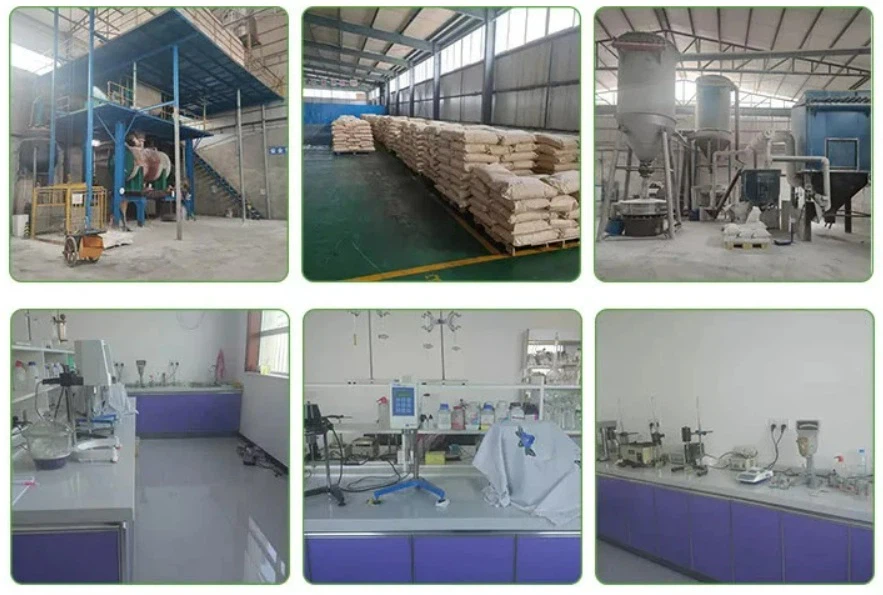
Our Factory
Wen'an Zhongde Chemical Co., Ltd. Founded in January 2010, it is located in the south of Beijing, the capital of China, 150 kilometers west of Tianjin Xingang. The company has advanced production equipment, the most mature production technology and modern standardized testing equipment, and testing methods meet international standards. Our products have passed the ISO9001: 2008 quality system certification, and the product quality has reached the international leading level.
Our Product
Carboxymethyl cellulose (CMC-HV, CMC-LV), polyanionic cellulose (PAC-LV, PAC-R, PAC-HV), hydroxypropyl methyl cellulose (HPMC), polyacrylamide (PAM, CPAM, APAM, NPAM),Sodium polyacrylate, carboxymethyl starch (CMS), high-temperature resistant starch for oil drilling, xanthan gum, shale inhibitor, sulfonated asphalt powder, anti sloughing agent white asphalt, plugging agent while drilling, guar gum Lubricants and detergents for drilling fluids, coating agents for drilling fluids.
Application & Market
Oil drilling construction wastewater treatment food textile printing and dyeing heat transfer.Nigeria, the United States, Japan, Russia, Türkiye, France, Pakistan, India... They come to our company for inspection and guidance.
Service Purpose
1. Fast, decisive, accurate, thoughtful and thorough
2. Service objective: Service quality to win customer satisfaction
3. Service efficiency: Solve product doubts and problems for customers in the first time.
In foods, xanthan gum is common in salad dressings and sauces. It helps to prevent oil separation by stabilizing the emulsion, although it is not an emulsifier. Xanthan gum also helps suspend solid particles, such as spices. Xanthan gum helps create the desired texture in many ice creams. Toothpaste often contains xanthan gum as a binder to keep the product uniform. Xanthan gum also helps thicken commercial egg substitutes made from egg whites, to replace the fat and emulsifiers found in yolks. It is also a preferred method of thickening liquids for those with swallowing disorders, since it does not change the color or flavor of foods or beverages at typical use levels.In gluten-free baking, xanthan gum is used to give the dough or batter the stickiness that would otherwise be achieved with gluten. In most foods, it is used at concentrations of 0.5% or less. Xanthan gum is used in a wide range of food products, such as sauces, dressings, meat and poultry products, bakery products, confectionery products, beverages, dairy products, and others.
In the oil industry, xanthan gum is used in large quantities to thicken drilling mud.These fluids carry the solids cut by the drilling bit to the surface. Xanthan gum provides improved "low end" rheology. When circulation stops, the solids remain suspended in the drilling fluid. The widespread use of horizontal drilling and the demand for good control of drilled solids has led to its expanded use. It has been added to concrete poured underwater, to increase its viscosity and prevent washout.
In cosmetics, xanthan gum is used to prepare water gels.It is also used in oil-in-water emulsions to enhance droplet coalescence. Xanthan gum is under preliminary research for its potential uses in tissue engineering to construct hydrogels and scaffolds supporting three-dimensional tissue formation.Furthermore, thiolated xanthan gum (see thiomers) has shown potential for drug delivery,since by the covalent attachment of thiol groups to this polysaccharide high mucoadhesive and permeation enhancing properties can be introduced.
The viscosity of xanthan gum solutions decreases with higher shear rates. This is called shear thinning or pseudoplasticity. This means that a product subjected to shear, whether from mixing, shaking or chewing, will thin. When the shear forces are removed, the food will thicken again. In salad dressing, the addition of xanthan gum makes it thick enough at rest in the bottle to keep the mixture fairly homogeneous, but the shear forces generated by shaking and pouring thins it, so it can be easily poured. When it exits the bottle, the shear forces are removed and it thickens again, so it clings to the salad. The rheology of xanthan aqua solutions become visco-elastic at higher concentrations of xanthan gum in water.
The greater the concentration of xanthan gum in a liquid, the thicker the liquid will become. An emulsion can be formed with as little as 0.1% (by weight). Increasing the concentration of gum gives a thicker, more stable emulsion up to 1% xanthan gum. A teaspoon of xanthan gum weighs about 2.5 grams and brings one cup (250 ml) of water to a 1% concentration.
Compositions and Classifications of Food Grade Xanthan Gum
The composition and classification of xanthan gum food grade
Edible colloids have attracted people's attention, especially food scientists, for their safety, unique elements, and unique physical and chemical properties. Xanthan gum 415 has a wide range of uses. It can be used in food industries such as cold food, beverages, dairy products, condiments, cakes, starches, candy, wine, food preservation and refrigeration. It can also be used in cosmetics, coatings, photosensitive resins, fertilizers, etc. Foundry, tobacco and pharmaceutical industries.
There are about 60 kinds of edible gums allowed to be used globally, and about 40 kinds of edible gums are allowed to be used in China. The most widely used edible gums in meat products in China mainly include carrageenan, xanthan gum, guar gum, agar, Gelatin, sodium alginate, locust bean gum and konjac gum, etc.
Commonly used edible gums are generally "natural products". For example, agar and carrageenan are extracts of seaweed. Gelatin is derived from the hydrolysis of animal skin or bones. But donkey-hide Gelatin is only different in material selection and process, and there is no essential difference from Gelatin. Among the edible gums, the more "advanced" pectin, the main source is the residue of orange peel and apple juice. Some edible gums are derived from plant seeds, such as gum arabic, guar gum, and locust bean gum, all extracted from the seeds of companion plants. There are also some hydrocolloids obtained by microbial fermentation, such as xanthan gum food additive.
Folding composition and structure of xanthan gum food grade
The main ingredient of food glue is the macromolecular substance of polysaccharides or proteins.
The elemental composition of polysaccharide food gums is monosaccharides and their derivatives. The chemical structure is a macromolecular polysaccharide formed by monosaccharide units. The different functional properties of xanthan gum food grade are caused by different types of monosaccharides, different polymerization degrees, different linkage and arrangement of sugar units, and the different substitution of hydroxyl groups on the unit. They are mainly reflected in the elements of solubility, viscosity, fluid characteristics, the gel solution stability to acid and alkali and temperature. The gelling ability and gel strength, gel solution to other electrolytes, compatibility, pseudoplasticity, synergy and complementarity among various polysaccharides of polysaccharide food gums are also influenced.
(1) The viscosity of xanthan gum in a low concentration of 0.1-1% far exceeds that of guar gum.
(2) Guar gum with a PH value of 3-4 is activated stably and has the best viscosity effect. The viscosity of guar gum will decrease when the PH value increases. The viscosity of xanthan gum is between 2-10, and its viscosity will not be affected by the PH value.
(3) Guar gum and xanthan gum have synergistic effects after blending. When the mixing ratio of xanthan gum and guar gum is 5:5, the synergistic effect is the greatest. The viscosity of the whole system of mixed rubber will increase with the increase of temperature. The viscosity of the overall system reaches its maximum when the preparation temperature reaches 80 degrees. While the overall system viscosity of the mixed rubber is variable under acidic conditions, its viscosity remains relatively stable under alkaline conditions. When the added amount of citric acid is between 0.1-0.3g/ml, it has basically no effect on the viscosity of the entire colloid system. The addition of sweeteners affects the overall viscosity of the colloid system.
(4)In terms of its characteristics, guar gum has good water solubility, a strong ability for water absorption, high viscosity, short aging time, and has a synergistic effect when coexisting with other colloids. In comparison, xanthan gum has strong stability, salt-resistance, and acid and alkali resistance.

Xanthan Gum Can Increase Oil Recovery Efficiency
Among the various methods for enhancing oil recovery, polymer flooding occupies an important position. The role of the polymer is to adjust the rheology of water injection, increase the viscosity of the driving fluid, and improve the sweep efficiency of water flooding. Reduce the permeability of the formation water phase so that the water and oil can flow forward at a uniform speed. This type of polymer must have excellent viscosity-increasing performance under reservoir conditions and a high viscosity retention rate under the action of temperature, pressure, and salt.
Because the xanthan gum oil solution has good viscosity, rheology, water-solubility, chemical stability, and solid mechanical resistance to degradation. It can be used as a displacement agent for oilfield exploitation. Compared with the general hydrolyzed polyacrylamide, its physical and chemical properties are stable, the processing technology is simple, the oil displacement effect is good, and the manufacturing cost is low. Because of its good resistance to shear degradation, it can selectively flow in the formation. The better oil displacement effect has been gradually used as a displacement agent to improve oilfield recovery or a chemical profile control agent to improve oilfield recovery.
The physical simulation experiment further shows that the xanthan gum drilling fluid improves oil recovery, and it is a kind of oil field exploitation displacement agent with excellent performance. After completing primary and secondary oil extraction using conventional methods, more than 50% of the oil remains in the rock formations that cannot be recovered.
Based on economic and energy considerations, people are paying more and more attention to improving the recovery rate of oil. The process of injecting water into oil rock formations is used for secondary oil extraction. However, the relative mobility of the injected fluid and the viscous crude oil leaves a lot of oil remains in the downhole.
If a thickening polymer is added to the injection liquid, the fluidity of the water can be reduced, thereby increasing the oil recovery rate. Many kinds of polymers can be used as flow control agents for oil recovery, among which xanthan gum oil is considered to have more application potential. Xanthan gum has many basic conditions necessary to improve oil recovery.
How Is Xanthan Gum Stored
Temperature: Xanthan gum should be stored in a cool, dry place away from direct sunlight and heat sources.
It is recommended to store this at a temperature of 20-25℃(68-77℉) to avoid any degradation or loss of quality. Extreme temperatures can cause the gum to break down, lose its thickening properties, and form clumps.
Humidity: Xanthan gum is hygroscopic, which means that it can absorb moisture from the air. To prevent moisture absorption and clumping, it is recommended to store this in an airtight container. This will help maintain the gum's stability and prolong its shelf life.
Packaging: Typically sold in powdered form and packaged in sealed, airtight containers to maintain its freshness and prevent contamination.
When storing this, it is important to keep it in its original packaging until it is ready to be used. If the original packaging has been opened, it is best to transfer the remaining gum to an airtight container to prevent moisture absorption and maintain its quality.
Exposure to air: Should be protected from exposure to air as much as possible, as this can cause it to clump and lose its thickening properties. If the gum is exposed to air, it is important to quickly reseal the container to prevent moisture absorption.
Shelf life: Xanthan gum has a long shelf life when stored properly. Generally, it can be stored for up to two years without significant degradation or loss of quality.
Our Factory
Wen'an Zhongde Chemical Co., Ltd. Founded in January 2010, it is located in the south of Beijing, the capital of China, 150 kilometers west of Tianjin Xingang. The company has advanced production equipment, the most mature production technology and modern standardized testing equipment, and testing methods meet international standards. Our products have passed the ISO9001: 2008 quality system certification, and the product quality has reached the international leading level.


FAQ
We're professional xanthan gum manufacturers and suppliers in China, specialized in providing high quality customized service. We warmly welcome you to buy high-grade xanthan gum in stock here from our factory.
xanthan gum in lotions, xanthan gum in pottery, xanthan gum in electroplating