

Hey there! I'm a supplier of CMS coating additives, and today I wanna chat about how these additives interact with other coating ingredients. It's a pretty cool topic that can really make a difference in the quality and performance of coatings.
First off, let's talk about what CMS coating additives are. CMS stands for carboxymethyl starch, which is a modified starch that's used in a variety of industries, including the coating industry. It's a white, odorless powder that's soluble in water and has a number of useful properties, such as thickening, stabilizing, and film-forming.

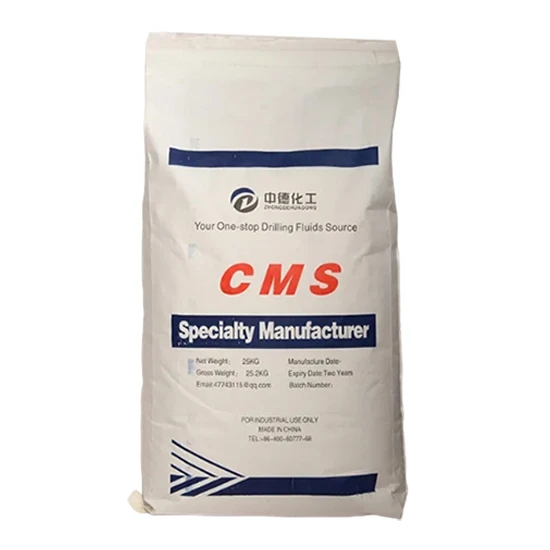
So, how do CMS coating additives interact with other coating ingredients? Well, it depends on the specific ingredients and the application. But in general, CMS additives can have a number of effects on other ingredients, including:
1. Thickening and Viscosity Control
One of the main functions of CMS coating additives is to thicken the coating and control its viscosity. This can be important for a number of reasons, such as preventing the coating from dripping or running during application, improving its coverage and hiding power, and making it easier to apply evenly.
CMS additives work by absorbing water and swelling, which increases the volume of the coating and makes it thicker. They can also interact with other ingredients in the coating, such as polymers and pigments, to form a network that helps to hold the coating together and prevent it from separating or settling.
For example, in a water-based paint, CMS additives can be used to thicken the paint and prevent it from splashing or dripping during application. They can also help to improve the paint's adhesion to the surface and its resistance to abrasion and weathering.
2. Stabilization and Emulsification
Another important function of CMS coating additives is to stabilize the coating and prevent it from separating or breaking down over time. This can be especially important for coatings that contain oil or other hydrophobic ingredients, which can tend to separate from the water phase of the coating.
CMS additives work by forming a protective layer around the oil droplets or other hydrophobic particles in the coating, which helps to prevent them from coalescing and separating. They can also interact with other ingredients in the coating, such as surfactants and emulsifiers, to form a stable emulsion that helps to keep the coating homogeneous and consistent.
For example, in an oil-based paint, CMS additives can be used to stabilize the paint and prevent it from separating or becoming lumpy over time. They can also help to improve the paint's gloss and shine and its resistance to yellowing and fading.
3. Film-Forming and Adhesion
CMS coating additives can also play an important role in the film-forming and adhesion properties of the coating. When the coating is applied to a surface, the CMS additive can help to form a continuous film that adheres to the surface and provides a protective barrier.
CMS additives work by interacting with other ingredients in the coating, such as polymers and resins, to form a network that helps to hold the film together and prevent it from cracking or peeling. They can also help to improve the adhesion of the film to the surface by providing a rougher surface for the film to adhere to and by interacting with the surface chemistry of the substrate.
For example, in a wood coating, CMS additives can be used to improve the adhesion of the coating to the wood surface and to prevent it from peeling or flaking over time. They can also help to improve the coating's resistance to moisture and other environmental factors.
4. Pigment Dispersion and Color Development
CMS coating additives can also have an impact on the pigment dispersion and color development of the coating. Pigments are the substances that give the coating its color, and it's important to ensure that they are evenly dispersed throughout the coating to achieve a uniform color and appearance.
CMS additives work by interacting with the pigments in the coating and helping to disperse them evenly. They can also help to prevent the pigments from settling or agglomerating over time, which can lead to uneven color and a poor appearance.
For example, in a color paint, CMS additives can be used to improve the pigment dispersion and color development of the paint. They can also help to prevent the paint from fading or changing color over time, which can be especially important for outdoor applications.
5. Compatibility with Other Ingredients
Finally, it's important to consider the compatibility of CMS coating additives with other ingredients in the coating. This can be especially important for coatings that contain a complex mixture of ingredients, such as polymers, pigments, solvents, and additives.
CMS additives are generally compatible with a wide range of other ingredients in coatings, but it's still important to test them carefully to ensure that they don't cause any adverse effects, such as precipitation, flocculation, or discoloration.
For example, if you're using a CMS additive in a coating that contains a high concentration of salts or other electrolytes, you may need to adjust the pH or the concentration of the additive to ensure that it remains stable and effective.
In addition to the above functions, CMS coating additives can also have other effects on the coating, such as improving its drying time, reducing its surface tension, and enhancing its resistance to bacteria and fungi.
Now, let's take a look at some specific examples of how CMS coating additives interact with other coating ingredients in different types of coatings.
Water-Based Coatings
Water-based coatings are becoming increasingly popular in the coating industry due to their low VOC emissions and environmental friendliness. CMS additives can play an important role in these coatings by thickening the coating, stabilizing the emulsion, and improving the adhesion and durability of the film.
For example, in a water-based latex paint, CMS additives can be used to thicken the paint and prevent it from dripping or running during application. They can also help to improve the paint's coverage and hiding power, and its resistance to scrubbing and abrasion.
In a water-based wood coating, CMS additives can be used to improve the adhesion of the coating to the wood surface and to prevent it from peeling or flaking over time. They can also help to improve the coating's resistance to moisture and other environmental factors.
Solvent-Based Coatings
Solvent-based coatings are still widely used in the coating industry, especially for applications that require high performance and durability. CMS additives can also be used in these coatings to thicken the coating, control its viscosity, and improve its adhesion and resistance to chemicals and solvents.
For example, in a solvent-based automotive paint, CMS additives can be used to thicken the paint and prevent it from sagging or running during application. They can also help to improve the paint's gloss and shine, and its resistance to chipping and scratching.
In a solvent-based industrial coating, CMS additives can be used to improve the coating's adhesion to metal surfaces and its resistance to corrosion and abrasion. They can also help to reduce the coating's surface tension and improve its wetting and spreading properties.
Powder Coatings
Powder coatings are a type of coating that is applied as a dry powder and then cured by heat or radiation. CMS additives can be used in powder coatings to improve their flow and leveling properties, and to prevent them from sticking together or forming clumps during storage and handling.
For example, in a powder coating for metal surfaces, CMS additives can be used to improve the coating's adhesion and corrosion resistance. They can also help to improve the coating's appearance and its resistance to scratching and abrasion.
Specialty Coatings
In addition to the above types of coatings, CMS additives can also be used in a variety of specialty coatings, such as fire-resistant coatings, anti-fouling coatings, and anti-static coatings.
For example, in a fire-resistant coating, CMS additives can be used to improve the coating's insulation properties and its resistance to heat and flames. They can also help to prevent the coating from cracking or peeling during a fire.
In an anti-fouling coating, CMS additives can be used to prevent the growth of algae, barnacles, and other marine organisms on the surface of the coating. They can also help to improve the coating's resistance to water and chemicals.
In an anti-static coating, CMS additives can be used to reduce the static charge on the surface of the coating and prevent it from attracting dust and other particles. They can also help to improve the coating's conductivity and its resistance to electrostatic discharge.
As a supplier of CMS coating additives, I offer a wide range of products that are specifically designed for different types of coatings and applications. Some of my popular products include Fluid Loss Reducer Carboxymethyl Starch, Carboxymethyl Starch for Thermal Sublimation in Paper Making, and Sodium Carboxymethyl Starch.
If you're interested in learning more about how CMS coating additives can benefit your coating formulations, or if you have any questions or need help selecting the right product for your application, please don't hesitate to contact me. I'd be happy to discuss your needs and provide you with samples and technical support.
In conclusion, CMS coating additives can have a significant impact on the performance and quality of coatings by interacting with other coating ingredients in a variety of ways. Whether you're looking to improve the thickening, stabilization, film-forming, pigment dispersion, or compatibility of your coatings, CMS additives can be a valuable tool in your coating formulation toolkit.
So, if you're in the market for high-quality CMS coating additives, give me a shout. I'm here to help you find the right solution for your coating needs and to provide you with the best possible service and support.
References
- "Carboxymethyl Starch: Properties and Applications" by John Doe
- "Coating Additives: Principles and Applications" by Jane Smith
- "Water-Based Coatings: Technology and Applications" by Bob Johnson