

Hydroxypropyl methylcellulose (HPMC) is one of the most general hydrophilic polymers, which is extensively used in many fields owing to its ease of use, excellent film-forming ability, good biocompatibility and biodegradability.HPMC has been displayed to possess hydrogel-forming properties, which are essential for mucoadhesion, and it also has rapid swelling due to high water absorbing capacity, including displaying moderate mucoadhesive properties as well. HPMC is a popular hydrophilic polymer used in the formulation of mucoadhesive films. To improve the mucoadhesive and physical properties of HPMC films, one efficient and interesting technique is blend films.
Advantages of Hydroxypropyl Methylcellulose HPMC
Thickening and Rheology Modification
Addition of HPMC to a coating formulation increases the viscosity of the coating and improves the flow properties of the mixture. It helps prevent paint sagging and dripping, resulting in a smoother, more uniform coating.
Improved Adhesion and Substrate Wettability
The surface activity of HPMC improves the spreading of the coating on the substrate and promotes better adhesion. Reduces the risk of coating delamination, flaking and long-term failure.
Bonding and Film Formation
As the coating dries, HPMC forms a continuous cohesive film that binds the pigments, fillers and various additives together. This enhances the mechanical strength, flexibility and durability of the dried coating, providing long-lasting protection for building surfaces.
Compatibility and Stability
HPMC is compatible with a wide range of coating components and maintains good dispersion throughout the application process. It helps prevent particle phase separation, sedimentation and agglomeration, ensuring long-term coating stability.
Water Retention and Stability
HPMC retains water in the coating, preventing premature drying and ensuring that the coating remains workable for a longer period of time. This results in better leveling, improved adhesion and less cracking of the dried film.
Environmental and Health Benefits
HPMC is a non-toxic, biodegradable and environmentally friendly ingredient that is ideal for sustainable architectural coatings.HPMC does not release harmful volatile organic compounds (VOCs) during application, helping to improve indoor air quality and minimize environmental impact.
-
![Hydroxypropyl Methylcellulose Hpmc Powder]() Hydroxypropyl Methylcellulose Hpmc PowderOur company has advanced liquid-phase reaction kettle and adopts the latest production technology to produce powdered hydroxypropyl methyl cellulose, which has been used as thickener, stabilizer,read more
-
![HPMC Grade Hydroxypropyl Methyl Cellulose]() HPMC Grade Hydroxypropyl Methyl CelluloseHPMC grade hydroxypropyl methylcellulose is an essential polymer that is widely used in a variety of applications across multiple industries. This high-performance cellulose ether is a non-ionicread more
-
![Construction Grade Hydroxypropyl Methylcellulose]() Construction Grade Hydroxypropyl MethylcelluloseConstruction-grade hydroxypropyl methylcellulose (HPMC) is a cellulose ether that is widely used in the construction industry as a binder, thickener, and water-retaining agent. It is obtained byread more
-
![High Quality Hydroxypropyl Methylcellulose]() High Quality Hydroxypropyl MethylcelluloseHigh-quality hydroxypropyl methylcellulose (HPMC) is a versatile material that is widely used in a variety of industries.In the construction industry, HPMC is often used as a mortar and cementread more
-
![Fine Chemicals Putty Powder Hpmc]() Fine Chemicals Putty Powder HpmcHydroxypropyl methylcellulose (HPMC) is a non-ionic, water-soluble cellulose mixed ether.It can be used as a thickener, emulsifier, film-forming agent, adhesive, dispersant, protective colloid, etc.read more


Why Choose Us
Our Factory
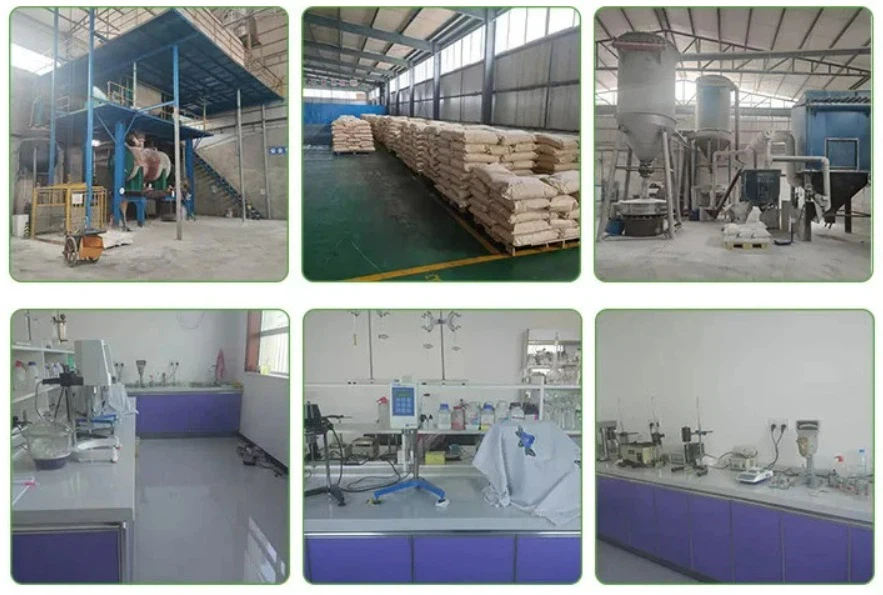
Wen'an Zhongde Chemical Co., Ltd. Founded in January 2010, it is located in the south of Beijing, the capital of China, 150 kilometers west of Tianjin Xingang. The company has advanced production equipment, the most mature production technology and modern standardized testing equipment, and testing methods meet international standards. Our products have passed the ISO9001: 2008 quality system certification, and the product quality has reached the international leading level.
Our Product
Carboxymethyl cellulose (CMC-HV, CMC-LV), polyanionic cellulose (PAC-LV, PAC-R, PAC-HV), hydroxypropyl methyl cellulose (HPMC), polyacrylamide (PAM, CPAM, APAM, NPAM),Sodium polyacrylate, carboxymethyl starch (CMS), high-temperature resistant starch for oil drilling, xanthan gum, shale inhibitor, sulfonated asphalt powder, anti sloughing agent white asphalt, plugging agent while drilling, guar gum Lubricants and detergents for drilling fluids, coating agents for drilling fluids.
Application & Market
Oil drilling construction wastewater treatment food textile printing and dyeing heat transfer.Nigeria, the United States, Japan, Russia, Türkiye, France, Pakistan, India... They come to our company for inspection and guidance.
Service Purpose
1. Fast, decisive, accurate, thoughtful and thorough
2. Service objective: Service quality to win customer satisfaction
3. Service efficiency: Solve product doubts and problems for customers in the first time.
Hydroxypropyl methylcellulose gives excellent viscosity to mortar, which can significantly increase the bonding ability between mortar and base and improve the anti-sagging property of mortar, which is widely used in plastering mortar, gypsum mortar and exterior wall insulation system. The thickening effect of hydroxypropyl methylcellulose can also increase the homogeneity and anti-dispersion ability of cementitious materials, prevent the delamination, segregation and water secretion of mortar and concrete, which can be used in fiber concrete, underwater concrete and self-compacting concrete.
The viscosity of hydroxypropyl methyl cellulose comes from the viscosity of cellulose ether solution. Usually use “viscosity” as an index to evaluate the viscosity of cellulose ether solution, the viscosity of cellulose ether generally refers to a certain concentration (e.g., 2%) of cellulose ether solution, in the specified temperature (e.g., 20℃) and rotation rate (e.g., 20 rpm) conditions, with the specified measuring instruments (such as rotational viscometer) measured viscosity value.
Viscosity is an important parameter for evaluating the performance of cellulose ether, the higher the viscosity of hydroxypropyl methylcellulose solution, the better the viscosity of the cementitious material, the better the adhesion performance to the substrate, and the better the anti-sagging and anti-dispersing ability, but if the viscosity is too large, it will affect the fluidity of the cementitious material and the workability.
The viscosity of hydroxypropyl methyl cellulose depends on the following factors
1. The higher the polymerization degree of cellulose ether and the higher the molecular weight, the higher the viscosity of its aqueous solution;
2. The higher the dosage (or concentration) of cellulose ether, the higher the viscosity of its aqueous solution, but care should be taken to choose the right dosage when using it, so as not to over-do the dosage, which will affect the working performance of mortar and concrete;
3. Like most liquids, the viscosity of cellulose ether solution will decrease with the increase of temperature, and the higher the concentration of cellulose ether, the greater the influence of temperature;
4. Cellulose ether solutions are usually pseudoplastic with shear-thinning properties, and the higher the shear rate during testing, the lower the viscosity.
The methoxy and hydroxypropoxy content and ratio of HPMC have a certain influence on the water solubility, water retention capacity, surface activity and gel temperature of the product. If HPMC has high methoxy content and low hydroxypropoxy content, then it has good water solubility, surface activity, and low gel temperature. An appropriate increase in hydroxypropoxy content and a decrease in methoxy content can increase the gel temperature. If the hydroxypropoxy content is too high, it will make the gel temperature lower again, and the water solubility and surface activity become worse, but the solubility performance in organic solvents is improved. So what are the main ways to control and regulate the methoxy content and hydroxypropoxy content?
Change The Amount Of Alkali Used In The Reaction System
The amount of alkali used in the cellulose alkalization process will directly affect the etherification efficiency of the product and the proportion of the content of the groups. The general rule is: that a high concentration of lye or an increase in the amount of the same base added will increase the methoxy content of the product. A low concentration of alkali or a small amount of solid base added can appropriately increase the hydroxypropoxy content of the product under the same process conditions. We can understand that the hydroxypropoxy content is inversely proportional to the lye concentration, and the methoxy content is proportional to the lye concentration.
Adjust The Temperature Change Of The Production Process
In the etherification stage of the HPMC production process, the main reactions are methylation and hydroxypropylation. The reaction conditions required for these two reactions are different, and the positive and negative reaction rates of the two are also quite different. This difference in reaction conditions makes the HPMC production process control and product structure more complex and unpredictable. We have to combine the requirements of the product index, and fully consider the structural characteristics of the equipment used, combined with quantitative analysis and testing, in order to reasonably control the HPMC product process, adjust the formula to achieve the desired results.


The reaction of hydroxypropylation can be carried out at about 30℃, and the reaction rate is greatly accelerated at 50℃. The reaction of methylation is slower at 60℃ and weaker below 50℃. Depending on the difference in reaction temperature between the two, a certain temperature is usually controlled so that one reaction is the main reaction. For example, under the condition of 50-60℃, the constant temperature is kept for a period of time, and the reaction of hydroxypropylation is mainly carried out. Then control the rate of temperature rise, in a certain period of time, rise to the etherification reaction stage which is mainly methylation reaction. And the reaction time is controlled to achieve the balance of methoxy and hydroxypropoxy to obtain a reasonable structure of the product. At present, Kemox has been using this multi-stage control technology, which is conducive to reducing side reactions and post-treatment.
Addition Amount Of Etherifying Agent
When the process conditions are determined, the dosage of etherizers chloromethane and propylene oxide and the ratio of the two have a direct and obvious influence on the methoxy and hydroxypropoxy values of the products. Constant reaction conditions, constant ratio, increasing the content of etherizers, increasing the content of substituent groups, and constant methoxy and hydroxypropoxy values within a certain range. Changing the ratio, increasing the content of one etherifying agent, the content of the corresponding substituent group increases, and the content of the other substituent group decreases.
The practice has proved that when the addition of chloromethane accounts for 70% to 85% of the total amount of etherifying agent, and the addition of propylene oxide accounts for 15% to 30% of the total amount of etherifying agent, the methoxy and hydroxypropoxy content of the product can be controlled within the range of 4% to 12%.
Hydroxypropyl Methylcellulose HPMC VS MC
Hydroxypropyl Methylcellulose is non-ionic cellulose mixed ether made from refined cotton by alkaline treatment and then by a series of reactions with propylene epoxide and methyl chloride as etherifying agents. The degree of substitution is generally 1.2-2.0. Its properties are varied depending on the difference of the proportion of methoxy content and hydroxy-propyl content.
1. Hydroxypropyl Methylcellulose is easily soluble in cold water but difficult to be soluble in hot water. However, its gelling temperature in hot water is significantly higher than that of Methyl Cellulose (MC). And compared with MC, the dissolution in cold water has also been greatly improved.
2. The viscosity of Hydroxypropyl Methylcellulose is related to the size of the molecular weight, and the larger the molecular weight is , the higher the viscosity is. The temperature will also affect its viscosity. As the temperature increases, the viscosity decreases. However, the viscosity of Hydroxypropyl Methylcellulose is less affected by the temperature than Methyl Cellulose, and its solution is stable in storage at room temperature.
3. Hydroxypropyl Methylcellulose has stability to acids and bases and its aqueous solution is very stable at pH 2-12. Caustic soda and lime water have little impact on its performance. but bases can accelerate its dissolution rate and slightly increase the viscosity. Hydroxypropyl Methylcellulose has the stability to general salts, but the Hydroxypropyl Methylcellulose solution viscosity will tend to increase when the concentration of the salt solution is high.
4. The water-retaining property of Hydroxypropyl Methylcellulose depends on its addition amount and viscosity. With the same addition amount, the water-retention rate of Hydroxypropyl Methylcellulose Hpmc is higher than that of MC.
5. Hydroxypropyl Methylcellulose can mix with water-soluble polymers and then form a uniform solution of higher viscosity, such as polyvinyl alcohol, starch ethers, and vegetable gums.
6. Hydroxypropyl Methylcellulose has higher adhesion on mortar construction than MC.
7. Hydroxypropyl Methylcellulose has better enzyme resistance than MC, and the possibility of enzymatic degradation of Hydroxypropyl Methylcellulose is less than that of MC.
Hydroxypropyl Methylcellulose HPMC in Different Industries
Construction industry
Hydroxypropyl methylcellulose HPMC is widely used in the construction industry as an adhesive, thickener and water retaining agent. When added to cement-based products such as mortar, stucco and concrete, hydroxypropyl methylcellulose HPMC improves workability by enhancing the adhesion and cohesion of the material. It also prevents the material from shrinking or cracking during the drying process. In addition, hydroxypropyl methylcellulose HPMC helps control the material’s setting time and enhances the water-holding capacity of the mixture. This increases the durability and quality of building materials.
Pharmaceutical industry
Hydroxypropyl methylcellulose HPMC is widely used in the pharmaceutical industry as a binder, thickener and disintegrant. Often used in tablet and capsule formulations to improve drug quality. When added to pharmaceutical formulations, it increases the cohesion of the powder, making it easier to handle. It also enhances the solubility and bioavailability of drugs, making them more easily absorbed by the body. Additionally, hydroxypropyl methylcellulose HPMC controls the release of the drug so that it is released slowly over time.
Cosmetics industry
Hydroxypropyl methylcellulose HPMC is an important ingredient in the cosmetics industry. It is used as a thickener, emulsifier and stabilizer in many cosmetic formulations, such as shampoos, lotions and creams. In shampoos, hydroxypropyl methylcellulose HPMC increases the viscosity and consistency of the product, making it easier to apply and distribute evenly. In lotions and creams, it increases the viscosity of the product and improves its texture, giving the skin a smooth, silky feel. In addition, hydroxypropyl methylcellulose HPMC helps stabilize emulsions in products, preventing oil and water from separating.
Food industry
Hydroxypropyl methylcellulose HPMC is used as a thickener, emulsifier and gelling agent in the food industry. It is commonly used in processed foods such as sauces, dairy products and baked goods. When added to food formulations, it improves the texture and consistency of products, providing a smooth, creamy texture. It also enhances the stability of the product, allowing it to stay fresher for a longer period of time. Hydroxypropyl methylcellulose HPMC provides a vegetarian alternative to gelatin, enabling manufacturers to produce vegan and vegetarian products.
Textile industry
Hydroxypropyl methylcellulose HPMC is used in the textile industry as a sizing agent for threads and fabrics. When applied to fabric, it adds strength, durability and stiffness to the material. It also prevents fabrics from shrinking or wrinkling during washing and drying. In addition, hydroxypropyl methylcellulose HPMC improves the adhesion of dyes and pigments, providing vibrant and long-lasting color.
Common Problems of Hydroxypropyl Methylcellulose (HPMC) in Putty Powder
Putty dry fast
It is mainly because the amount of gray calcium powder added is too large, you can appropriately reduce the amount of gray calcium powder used in the putty formula. The drying time of putty is related to the water retention rate of hydroxypropyl methylcellulose, as well as the dryness of the wall.
Peeling and rolling
This is related to the large content of grey calcium in putty, or the low water retention rate of hydroxypropyl methylcellulose, the low viscosity hpmc or low additive amount is also prone to this situation.
Powdering of putty powder
This is related to the addition of gray calcium powder, putty formula in the amount of gray calcium powder is too small or gray calcium powder purity is too low, should be appropriate to increase the amount of gray calcium powder in the putty powder formula. At the same time, it is also related to the amount and quality of cellulose added, which is reflected in the water retention rate of the product, low water retention rate, the reaction time of gray calcium powder is not enough, and the calcium oxide in the gray calcium powder is not fully converted to calcium hydroxide.
Blistering
This is related to the dryness, humidity and flatness of the wall, and also related to the construction.
Needle point phenomenon
This has something to do with the quality of cellulose, cellulose film-forming poor, while impurities in the cellulose and calcium ash reacted slightly, if the reaction is strong, then the putty powder presents tofu dregs state, and putty has no bonding power. In addition, cellulose mixed with carboxymethyl a class of products may also appear this situation.
Putty is easy to crack after drying, yellowing
This is related to the amount of gray calcium powder, if the gray calcium powder to add more, resulting in increased hardness of putty powder after drying, only the hardness is not flexible, it is easy to crack, especially when subjected to external forces, it is more likely to crack. It is also related to the high content of calcium oxide in gray calcium powder.
Putty powder with water, the more you stir the more dilute
Cellulose as a thickening agent water retention agent in the putty on the application, due to the cellulose itself thixotropic, putty powder in the cellulose added also led to the putty after adding water to produce a thixotropic. This thixotropy is caused by the destruction of the structure in which the components of the putty powder are loosely bound. This structure arises at rest and breaks up under stress. This means that the viscosity decreases under agitation and recovers at rest.
Putty sinks more during the scraping process
The viscosity of cellulose used is too high, use cellulose with 200,000 viscosity to make putty, so the putty made by high viscosity, so there is a sinking feeling when scraping. Interior wall putty is recommended to add 3-5 kilograms, viscosity of 8-10 million.
Our Factory
Wen'an Zhongde Chemical Co., Ltd. Founded in January 2010, it is located in the south of Beijing, the capital of China, 150 kilometers west of Tianjin Xingang. The company has advanced production equipment, the most mature production technology and modern standardized testing equipment, and testing methods meet international standards. Our products have passed the ISO9001: 2008 quality system certification, and the product quality has reached the international leading level.


FAQ
We're professional hydroxypropyl methylcellulose hpmc manufacturers and suppliers in China, specialized in providing high quality customized service. We warmly welcome you to buy high-grade hydroxypropyl methylcellulose hpmc in stock here from our factory.
high performance hpmc, market trend hpmc, specialized hpmc