

Polyanionic cellulose (PAC) is a widely used drilling fluid additive. It has a similar molecular structure to carboxymethyl cellulose (CMC). However, it is considered better than CMC in terms of filtration reduction, anti-salt, anti-collapse, and high-temperature resistance. It can be used at temperatures up to 150℃.PAC is considered a premium product because it typically has a higher degree of carboxymethyl substitution and can contain less residual Sodium Chloride.PAC polyanionic cellulose is added to drilling fluids and other mixtures of chemicals to aid in several actions, including the cool down and lubrication of the mud bit, suspension of formation cuttings, and aid transportation of the surface, and management formation pressure throughout the oil well.
Fluid Loss Control
One of the primary functions of polyanionic cellulose PAC is to reduce fluid loss. In drilling operations, maintaining the stability of the borehole is crucial. Excessive fluid loss can lead to the weakening of the borehole walls, causing collapses or blowouts. polyanionic cellulose PAC helps in forming a thin, low-permeability filter cake on the borehole walls, effectively reducing the filtration rate of the drilling fluid into the formation.
Viscosity Enhancement
Polyanionic cellulose PAC acts as a viscosifier, which is essential for the suspension and transport of drill cuttings to the surface. By increasing the viscosity of the drilling fluid, PAC ensures that the cuttings are efficiently carried to the surface, preventing their accumulation at the bottom of the hole, which could lead to stuck pipe situations or other drilling complications.
Thermal Stability
Drilling operations often encounter high-temperature environments. Polyanionic cellulose PAC is known for its thermal stability, maintaining its performance even under elevated temperatures. This stability ensures consistent fluid properties, crucial for the efficiency and safety of drilling operations.
Compatibility
Polyanionic cellulose PAC is compatible with a wide range of drilling fluids, including water-based and synthetic-based muds. This versatility makes it an ideal choice for various drilling environments and challenges, ensuring that the drilling fluid performs optimally regardless of the conditions.
Environmental Safety
Being a derivative of cellulose, polyanionic cellulose PAC is biodegradable and environmentally friendly. In an industry increasingly focused on reducing its environmental footprint, the use of polyanionic cellulose PAC aligns with sustainable drilling practices, minimizing ecological impact.
-
![High Viscosity Polyanionic Cellulose]() High Viscosity Polyanionic CelluloseThe performance of polyanionic cellulose produced by our company is stable, representing the advanced level of the development of the domestic anionic cellulose ether industry. The product has beenread more
High Viscosity Polyanionic CelluloseThe performance of polyanionic cellulose produced by our company is stable, representing the advanced level of the development of the domestic anionic cellulose ether industry. The product has beenread more -
![Daily Grade Cellulose PAC]() Daily Grade Cellulose PACCellulose PAC has a number of properties that make it an ideal ingredient in the manufacture of products such as paper, textiles, and other cellulose-based materials. It is a highly soluble compound,read more
Daily Grade Cellulose PACCellulose PAC has a number of properties that make it an ideal ingredient in the manufacture of products such as paper, textiles, and other cellulose-based materials. It is a highly soluble compound,read more -
![Oil Drillingfor Mud Additives]() Oil Drillingfor Mud AdditivesOne of the main advantages of mud additives is that they help maintain the stability of the wellbore. Wellbore stability refers to the ability of a wellbore to maintain its integrity during drilling.read more
Oil Drillingfor Mud AdditivesOne of the main advantages of mud additives is that they help maintain the stability of the wellbore. Wellbore stability refers to the ability of a wellbore to maintain its integrity during drilling.read more -
![White Powder Drilling Fluid Mud High Viscosity]() White Powder Drilling Fluid Mud High ViscosityWhite Powder Drilling Fluid High Viscosity Mud is a special type of drilling fluid used by drilling companies. It is composed of a variety of substances, including bentonite, attapulgite, andread more
White Powder Drilling Fluid Mud High ViscosityWhite Powder Drilling Fluid High Viscosity Mud is a special type of drilling fluid used by drilling companies. It is composed of a variety of substances, including bentonite, attapulgite, andread more -
![Low Viscosity Polyanionic Cellulose]() Low Viscosity Polyanionic CelluloseLow viscosity polyanionic cellulose is derived from natural cellulose and is the main structural component of plants. Cellulose is a long-chain polymer made up of glucose units. When cellulose isread more
Low Viscosity Polyanionic CelluloseLow viscosity polyanionic cellulose is derived from natural cellulose and is the main structural component of plants. Cellulose is a long-chain polymer made up of glucose units. When cellulose isread more


Why Choose Us
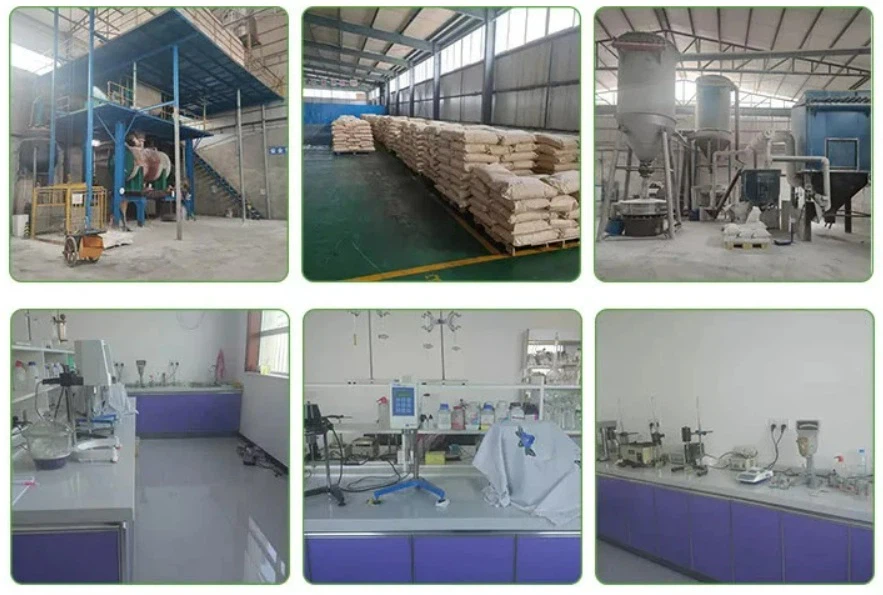
Our Factory
Wen'an Zhongde Chemical Co., Ltd. Founded in January 2010, it is located in the south of Beijing, the capital of China, 150 kilometers west of Tianjin Xingang. The company has advanced production equipment, the most mature production technology and modern standardized testing equipment, and testing methods meet international standards. Our products have passed the ISO9001: 2008 quality system certification, and the product quality has reached the international leading level.
Our Product
Carboxymethyl cellulose (CMC-HV, CMC-LV), polyanionic cellulose (PAC-LV, PAC-R, PAC-HV), hydroxypropyl methyl cellulose (HPMC), polyacrylamide (PAM, CPAM, APAM, NPAM),Sodium polyacrylate, carboxymethyl starch (CMS), high-temperature resistant starch for oil drilling, xanthan gum, shale inhibitor, sulfonated asphalt powder, anti sloughing agent white asphalt, plugging agent while drilling, guar gum Lubricants and detergents for drilling fluids, coating agents for drilling fluids.
Application & Market
Oil drilling construction wastewater treatment food textile printing and dyeing heat transfer.Nigeria, the United States, Japan, Russia, Türkiye, France, Pakistan, India... They come to our company for inspection and guidance.
Service Purpose
1. Fast, decisive, accurate, thoughtful and thorough
2. Service objective: Service quality to win customer satisfaction
3. Service efficiency: Solve product doubts and problems for customers in the first time.
Polyanionic cellulose (PAC) is a kind of nonionic cellulose ether. The PAC polymer featured the properties of high purity, high DS, particularly high viscosity (PAC-HV), or low viscosity (PAC-LV). These products are demi-natural polymer additives, thickening agents, and filtrate reducers.
Polyanionic cellulose is an indispensable product for drilling mud making. It is a high-purity product. The water solution of this PAC polymer powder is transparent and viscid.
As a water-soluble polymer, polyanionic cellulose dissolves immediately in cold/hot water. And it can be used as a thickening agent, rheology controller, bond, stabilizer, colloid protector, suspending agent, and filtrate reducer.
Polyanionic cellulose is a good drilling mud additive. It is also an important material for confecting well liquid, a high mud volume product with high acid and salt-resistance ability.
In addition, Polyanionic cellulose (PAC) is a good filtrate reducer that can increase viscosity and anti-high temperature (150℃) in freshwater, seawater, or saturated brine well-completion liquid.
Specifications
| Item | Standard | ||
| PAC-LV | PAC-HV | ||
| Appearance | Freely flowable powder | Freely flowable powder | |
| PH | 6.0-8.0 | 6.0-8.0 | |
| Purity | 95% Min. | 95% Min. | |
| Moisture | 10% Max. | 10% Max. | |
| D.S. | 0.90 Min. | 0.90 Min. | |
| Viscosity Brookfield 1% | 50 Max. | 1500 Min. | |
| API Fluid Lose | Increase 0.57% | 25.0ml Max. | 20.0ml Max. |
| Increase 0.86% | 15.0ml Max. | 15.0ml Max. | |
| Increase 1.14% | 10.0ml Max. | 10.0ml Max. | |
| YP Value | Increase 0.57% | 0.5 Max. | 2.4 Min. |
| Increase 0.86% | 1.0 Max. | 9.6 Min. | |
| Increase 1.14% | 1.5 Max. | 19.2 Min. | |
Oil And Gas Industry
PAC is commonly used as a drilling fluid additive to control fluid viscosity, improve fluid loss control, and enhance shale inhibition. It helps in maintaining wellbore stability and reducing drilling problems.
Pharmaceutical Industry
PAC is used as a binder, disintegrant, and tablet coating agent in pharmaceutical formulations. It improves the tablet’s integrity, aids in drug release, and enhances the overall quality of the final product.
Food Industry
PAC is utilized as a stabilizer, thickener, and emulsifier in food products. It improves texture, prevents ingredient separation, and enhances the stability and mouthfeel of various food items.
Paper Industry
PAC is employed as a retention aid and drainage aid in the production of paper and paperboard. It increases the retention of fine particles and fibers, improves drainage efficiency, and enhances the formation of the final paper product.
Water treatment
PAC is used as a flocculant in water treatment processes. It aids in the removal of suspended particles, colloids, and organic matter, facilitating the clarification and purification of water.
Construction industry
PAC is added to cement-based products, such as mortar and concrete, to enhance their rheological properties, workability, and water retention capacity. It improves the overall performance and durability of construction materials.
Cosmetics and personal care products
PAC is incorporated into various cosmetic and personal care formulations as a thickening agent, stabilizer, and emulsion stabilizer. It enhances the texture, viscosity, and stability of creams, lotions, and other cosmetic products.
Polyanionic Cellulose, be called for short PAC, to take natural cellulose as basic raw material, a kind of water miscible ionic ether of cellulose obtaining through chemical modification, its solution has thickening, bonding film forming, keeps moisture, emulsification and suspension effect, be widely used in the aspects such as food, toothpaste, coating, mining, petroleum drilling, be described as " industrial monosodium glutamate ".
Polyanionic Cellulose is a kind of important mud conditioner in petroleum drilling, for aspects such as drilling well, completion and well cementation, plays tackify, falls leak-off, the effect such as gelling, suspension.Due to the continuous expansion of petroleum exploration field and the day by day increase of average drilling depth, the specification of quality of PAC is improved constantly, require PAC to there is higher viscosity, salt tolerance, anticalcium and temperature resistance.
(1) In kneader, by 1215g concentration, be 50.2%(w/w) the NaOH aqueous solution, 1626g concentration be 92%(v/v) aqueous ethanolic solution mix, and by water coolant, it is cooled to 10-35℃; The mass ratio of the described NaOH aqueous solution and described aqueous ethanolic solution is 1:1.338; The purified cotton fibre element that is 2820 by the 1000g polymerization degree through tearing up after processing is put in kneader, obtains compound A; At 15-40℃, carry out quaternization, after reaction 50min, obtain soda cellulose; Described purified cotton fibre element is 1:1.626 with the mass ratio of described aqueous ethanolic solution;


(2) In 25min, the mode by spray is 70%(w/w by 850g concentration) chloroacetic aqueous ethanolic solution mix with soda cellulose, mixing temperature is controlled in 15-40℃, wherein the concentration of aqueous ethanolic solution is 92%(v/v), obtain compound B;
(3) In 10min by 153g purity >=99%(w/w) solid NaOH slowly and be spilled into equably in described compound B and mix with it, at 20-40℃, stir 15min, obtain compound C;
(4) By the mode of spray, 364g etherifying agent is sprayed in described compound C and with it and mixed in 15min, at 20-40℃, stir 15min, obtain compound D; Described etherifying agent is chloroacetic aqueous ethanolic solution; Compound D carries out etherification reaction 40min at 75-78℃, after reaction, be cooled to below 50℃, by 500g etherification product and 1800mL concentration, be 68%(v/v) aqueous ethanolic solution mix, with hydrochloric acid adjust pH, to 6.5-9.0, wash and centrifugal operation 3 times, during washing, adopt 68%(v/v) aqueous ethanolic solution as washing composition, and it is centrifugal to adopt horizontal spiral discharge sedimentation centrifuge to carry out, dry, pulverize.
Types of Polyanionic Cellulose PAC
Polyanionic Cellulose (PAC) - LC High Viscosity
Polyanionic Cellulose (PAC) High Viscosity grade is characterized by its high viscosity when dissolved in water. PAC itself is a water-soluble polymer derived from cellulose, and it is often chemically modified to introduce anionic (negatively charged) functional groups onto the cellulose backbone.
The “High Viscosity” grade indicates that this particular type of PAC is designed to significantly increase the viscosity of the fluid in which it is dissolved. Viscosity refers to the resistance of a fluid to flow, and in the case of PAC, it is often used to control the rheological properties of fluids in various industrial applications.
Key features of Polyanionic Cellulose High Viscosity grade include:
●Thickening Agent: PAC High Viscosity grade is used as a thickening agent, particularly in applications where a substantial increase in viscosity is required. This is common in industries such as oil and gas drilling.
●Fluid Loss Control: It helps control fluid loss in drilling fluids, preventing the invasion of drilling fluids into the formation.
●Stabiliser: It acts as a stabilizer, contributing to the stability of the fluid or solution.
●Enhanced Oil Recovery (EOR): In some cases, High Viscosity PAC may be used in enhanced oil recovery processes to modify the rheological properties of water-based fluids.
Polyanionic Cellulose (PAC) - LC Low Viscosity
Polyanionic Cellulose (PAC) Low Viscosity grade is characterised by its relatively lower viscosity when dissolved in water compared to other PAC grades. PAC itself is a water-soluble polymer derived from cellulose, and it is often chemically modified to introduce anionic (negatively charged) functional groups onto the cellulose backbone.
The “Low Viscosity” designation indicates that this particular type of PAC is designed to have a lower impact on the viscosity of the fluid in which it is dissolved. While it still serves as a thickening agent, it does so to a lesser extent than higher viscosity grades of PAC.
Key features of Polyanionic Cellulose Low Viscosity grade include:
●Thickening Agent: PAC Low Viscosity grade is used as a thickening agent, but it imparts a lower viscosity compared to higher viscosity grades. It is still effective in modifying the rheological properties of fluids but to a lesser degree.
●Fluid Loss Control: Similar to higher viscosity grades, Low Viscosity PAC can help control fluid loss in drilling fluids, preventing the invasion of drilling fluids into the formation.
●Stabiliser: It acts as a stabiliser, contributing to the stability of the fluid or solution.
●Versatility: Low Viscosity PAC may find applications where a moderate increase in viscosity is desired without significantly impacting the flow characteristics of the fluid.
Prospects of Polyanionic Cellulose PAC
PAC, short for polyanionic cellulose, is a water-soluble cellulose ether derivative made from natural cellulose by chemical modification, and usually the sodium salt of PAC is in application. PAC is in the appearance of white powder, non-toxic, odorless, and soluble in water to form a viscous solution. Due to the introduction of strongly polar sodium carboxymethyl in the polymers of linear structure, the water-soluble colloid of PAC has good thickening, suspending, dispersing, emulsifying, stabilizing, salt resistance, water retention, and protective colloid effects, widely used in petroleum, paints, daily chemicals, food, textile, papermaking, building materials and other fields.
PAC belongs to polymer anionic electrolytes, usually obtained from the isopropyl alcohol solution of alkali cellulose and chloroacetic acid by etherification reaction. The raw materials for the production of PAC are similar to those for the production of high viscosity CMC, but in the production process, different degradation methods are employed so that the substitution of hydroxyl group in the ring structure of β-glucose group will be more uniform.
The uses of PAC are quite wide. Now the products mainly supply the domestic oil drilling market, used as the additive of oil drilling mud on land and offshore, in conjunction with HEC. PAC is better than other carboxymethyl celluloses in salt resistance, has the effect of inhibiting and dispersing the drill cuttings, and in the case of higher well temperatures can maintain good stability and resistance to water loss, so is an important and efficient treatment agent in the drilling mud.
In the coatings industry, replacing the solvent-based coatings with the water-based coatings has become an inevitable trend in the development of the coatings industry. PAC can be added to the water emulsion coatings and used as the thickener and film former, can make the product storage stable, the color development uniform, the rheologic property good, easy for the mechanical construction, and can help to improve the flexibility and gloss of coatings. In the daily chemical industry, it can be used in the viscous additives of toothpaste, the dirt-dispersing agent and anti-redeposition agent of soaps and detergents, as well as the film former, binder, and conditioning agent of cosmetics. In the textile industry, it can be used for the sizing agent of veil as an alternative to starch, and for the printing paste of cotton and the penetrated printing paste of real silk in order to increase the fluidity of the paste and act as a protective colloid in emulsion paste. In the paper industry, it is used for the thickener of paper pulp and the oil-resistant ink-absorbing agent, can increase the longitudinal strength and smoothness of paper, and can improve the oil resistance and ink absorbency of paper. In addition, it is used as the emulsifier of gelatin, ice cream and margarine in food, the binder of ceramic powders, the crack resistant agent of concrete walls, and for processing of other fine chemical products.
Polyanionic Cellulose PAC Storage
PAC should be stored in a dry and cool environment to maintain its quality and prolong its shelf life.
Dry Environment
PAC should be stored in a dry environment to prevent moisture absorption, which can cause clumping and degradation of the material. Moisture can affect the solubility and performance of PAC.
Cool Temperature
It is recommended to store PAC in a cool area to minimize the risk of temperature-related degradation. High temperatures can accelerate the degradation process and reduce the effectiveness of the polymer.
Sealed Containers
PAC should be stored in sealed containers or bags to protect it from exposure to air, humidity, and contaminants. This helps maintain the quality and stability of the product.
Proper Labeling
Ensure that the containers or bags used for storage are clearly labeled with the name, batch number, and date of storage. This helps in tracking and maintaining proper inventory control.
Avoid Direct Sunlight
PAC should be kept away from direct sunlight or any other sources of intense heat, as this can lead to degradation and loss of functionality.
FIFO System
Implement a “first in, first out” (FIFO) system to ensure that older stock is used first, minimizing the chances of PAC reaching its expiration date before use.
Our Factory
Wen'an Zhongde Chemical Co., Ltd. Founded in January 2010, it is located in the south of Beijing, the capital of China, 150 kilometers west of Tianjin Xingang. The company has advanced production equipment, the most mature production technology and modern standardized testing equipment, and testing methods meet international standards. Our products have passed the ISO9001: 2008 quality system certification, and the product quality has reached the international leading level.


FAQ
We're professional polyanionic cellulose pac manufacturers and suppliers in China, specialized in providing high quality customized service. We warmly welcome you to buy high-grade polyanionic cellulose pac in stock here from our factory.
polyanionic cellulose pac, pac for renewable energy, oil drillingfor mud additives