

Compatibility problems of CMS (Carboxymethyl Starch) modified starch in formulations can significantly impact the performance and quality of various products. As a CMS modified starch supplier, I understand the challenges that manufacturers face when integrating this versatile ingredient into their formulations. In this blog, I will share some insights and strategies on how to solve these compatibility issues effectively.
Understanding CMS Modified Starch
CMS modified starch is a chemically modified derivative of starch, where carboxymethyl groups are introduced to the starch molecule. This modification enhances the starch's properties, such as solubility, viscosity, and stability, making it suitable for a wide range of applications in industries like food, pharmaceuticals, papermaking, and oil drilling. Sodium Carboxymethyl Starch is one of the most common forms of CMS, known for its excellent water - binding and thickening capabilities.
Common Compatibility Problems
1. Chemical Interactions
When CMS modified starch is added to a formulation, it may interact chemically with other ingredients. For example, in acidic or alkaline environments, the carboxymethyl groups on the starch molecule can react, altering the starch's properties. In food formulations, acid - containing ingredients like citrus juices may cause the starch to lose its thickening ability if not properly formulated.
2. Physical Incompatibility
There can be physical incompatibilities, such as phase separation. In some emulsions or suspensions, CMS may not disperse evenly, leading to clumping or sedimentation. This is especially important in CMS Coating Additives applications, where a uniform coating is required for optimal performance.
3. Compatibility with Other Polymers
In formulations that contain other polymers, CMS may not blend well. For instance, in a polymer - based adhesive formulation, CMS may not interact synergistically with other polymers, resulting in poor adhesion strength.
Strategies to Solve Compatibility Problems
1. pH Adjustment
Controlling the pH of the formulation is crucial. Before adding CMS modified starch, it is necessary to analyze the pH requirements of the final product. If the formulation is acidic, it may be beneficial to pre - treat the starch in a slightly alkaline environment to enhance its stability. For example, in a food product with a low pH, adding a small amount of a pH - buffering agent can help maintain the starch's functionality.
2. Proper Dispersion Techniques
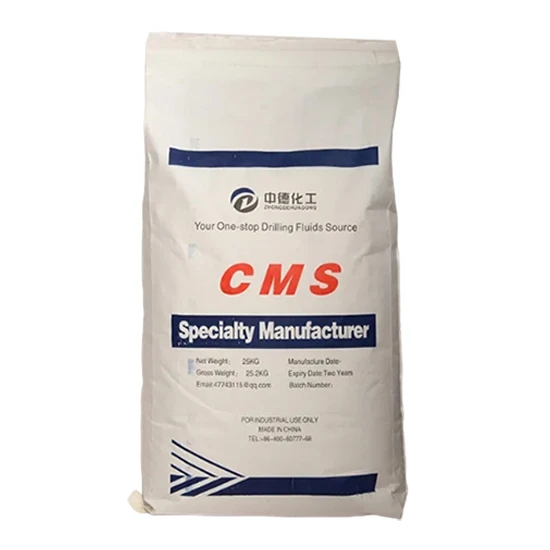
To overcome physical incompatibilities, proper dispersion techniques are essential. High - shear mixing can be used to ensure that the CMS is evenly distributed in the formulation. In some cases, pre - hydrating the starch in a small amount of water before adding it to the main formulation can also improve dispersion. For example, in the production of Fluid Loss Reducer Carboxymethyl Starch for oil drilling applications, pre - hydration can help the starch particles disperse more effectively in the drilling fluid.

3. Compatibility Testing
Before large - scale production, conducting compatibility tests is highly recommended. This involves testing different ratios of CMS with other ingredients in the formulation. By doing so, manufacturers can identify the optimal combination that provides the best performance. For example, in a pharmaceutical tablet formulation, testing different amounts of CMS as a disintegrant with other excipients can help determine the ideal formulation.
4. Use of Additives
Adding certain additives can also improve compatibility. For example, surfactants can be used to enhance the dispersion of CMS in non - aqueous or oil - based formulations. Chelating agents can be added to prevent chemical reactions between the starch and metal ions in the formulation, which could otherwise affect the starch's properties.
Case Studies
Food Industry
In the production of a fruit - based yogurt, the addition of CMS was initially causing problems. The acidic nature of the fruit juice was reducing the thickening ability of the starch, leading to a runny product. By adjusting the pH of the juice with a small amount of sodium bicarbonate before adding the CMS, the stability of the starch was improved, resulting in a thicker and more stable yogurt.
Pharmaceutical Industry
In a tablet formulation, CMS was being used as a disintegrant. However, when combined with certain polymers, the tablets were not disintegrating properly. Through compatibility testing, it was found that adjusting the ratio of CMS to the polymers and adding a small amount of a surfactant improved the tablet's disintegration properties significantly.
Importance of Supplier - Customer Collaboration
As a CMS modified starch supplier, we play a crucial role in helping our customers solve compatibility problems. We have in - depth knowledge of the product's properties and can provide technical support. By working closely with our customers, we can understand their specific formulation requirements and offer customized solutions. For example, if a customer is facing compatibility issues in a new application, we can conduct additional tests in our laboratory to develop a more suitable CMS grade.
Conclusion
Solving the compatibility problems of CMS modified starch in formulations requires a comprehensive understanding of the starch's properties, the nature of other ingredients in the formulation, and the specific requirements of the final product. By following the strategies mentioned above, such as pH adjustment, proper dispersion techniques, compatibility testing, and the use of additives, manufacturers can overcome these challenges and achieve optimal performance.
If you are facing compatibility problems with CMS modified starch in your formulations or are interested in exploring the potential of our products, we would be more than happy to assist you. Contact us to start a discussion on how we can work together to meet your needs.
References
- Bemiller, J. N., & Whistler, R. L. (Eds.). (2009). Starch: Chemistry and Technology. Academic Press.
- Rutenberg, M. W., & Solarek, D. (1984). Modified Starches: Properties and Uses. CRC Press.