

Polyacrylamides are high molecular weight water soluble or swellable polymers formed from acrylamide or its derivatives. Their glass transition temperature is well above room temperature (> 400 K). Polyacrylamide PAM is currently the most widely used synthetic organic polymer flocculant, and sometimes it is also used as a coagulant aid. The raw material for the production of polyacrylamide is polyacrylonitrile CH2=CHCN. Under certain conditions, acrylonitrile is hydrolysed to produce acrylamide, and acrylamide is then subjected to suspension polymerization to obtain polyacrylamide. Polyacrylamide is a water-soluble resin, and its products include granular solid and a certain concentration of viscous aqueous solution.
Advantages of Polyacrylamide PAM
Flocculation
PAM can make suspended substances through electric neutralization, bridging adsorption and flocculation.
Adhesion
It can play the role of adhesion through mechanical, physical and chemical actions.
Drag Reduction
PAM can effectively reduce the friction resistance of the fluid. Adding a small amount of PAM into the water can reduce the drag by 50-80%.
Thickening
PAM has thickening effect under neutral and acid conditions, and PAM is easy to hydrolyze when the PH value is above 10. The thickening will be more obvious when the structure is semi-reticular.
-
![Sewage Treatment Flocculation Thickener PAM]() Sewage Treatment Flocculation Thickener PAMPolyacrylamide (PAM) is a general term for acrylamide homopolymer or polymer obtained by copolymerization with other monomers. It is one of the most widely used varieties of water-soluble polymers.read more
Sewage Treatment Flocculation Thickener PAMPolyacrylamide (PAM) is a general term for acrylamide homopolymer or polymer obtained by copolymerization with other monomers. It is one of the most widely used varieties of water-soluble polymers.read more -
![Oil Well Fluid Additive Polymer PAM]() Oil Well Fluid Additive Polymer PAMWater treatment includes raw water treatment, sewage treatment and industrial water treatment.Polyacrylamide is a multifunctional oilfield chemical treatment agent, which is widely used in theread more
Oil Well Fluid Additive Polymer PAMWater treatment includes raw water treatment, sewage treatment and industrial water treatment.Polyacrylamide is a multifunctional oilfield chemical treatment agent, which is widely used in theread more -
![Excellent Polymer Flocculant]() Excellent Polymer FlocculantExcellent polymer flocculants are highly effective tools for water treatment, wastewater treatment and industrial processes where suspended solids need to be removed. These flocculants are carefullyread more
Excellent Polymer FlocculantExcellent polymer flocculants are highly effective tools for water treatment, wastewater treatment and industrial processes where suspended solids need to be removed. These flocculants are carefullyread more -
![Chemical Powder Coating Suspension Agent PAM]() Chemical Powder Coating Suspension Agent PAMChemical powder coating suspension PAM is a popular product used in a variety of industrial applications. Thanks to its unique composition, this powder coating suspension effectively prevents theread more
Chemical Powder Coating Suspension Agent PAMChemical powder coating suspension PAM is a popular product used in a variety of industrial applications. Thanks to its unique composition, this powder coating suspension effectively prevents theread more -
![Drilling Mud Polyacrylamide PAM]() Drilling Mud Polyacrylamide PAMDrilling mud polyacrylamide (PAM) has a wide range of uses, especially in oil extraction and drilling processes. Below are the main uses of PAM in drilling muds, with detailed explanations based onread more
Drilling Mud Polyacrylamide PAMDrilling mud polyacrylamide (PAM) has a wide range of uses, especially in oil extraction and drilling processes. Below are the main uses of PAM in drilling muds, with detailed explanations based onread more


Why Choose Us
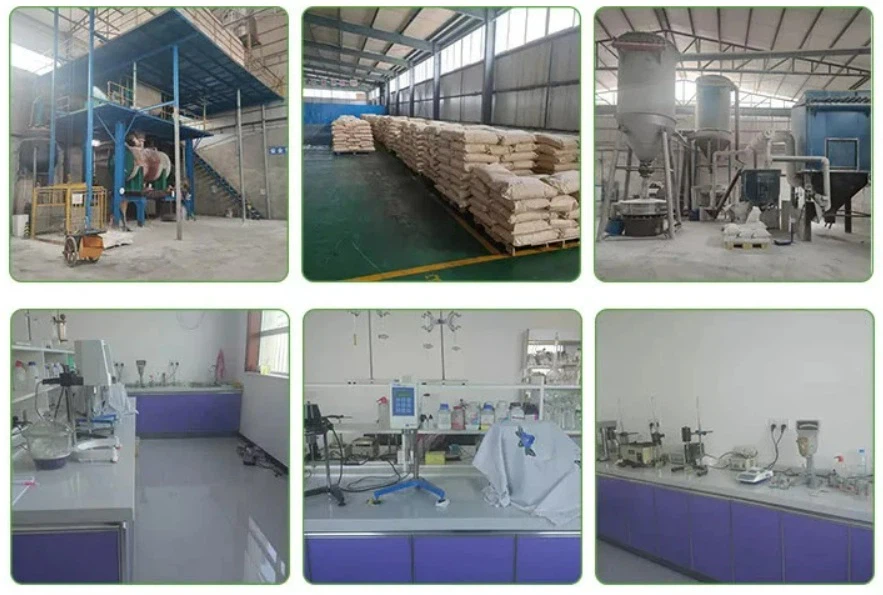
Our Factory
Wen'an Zhongde Chemical Co., Ltd. Founded in January 2010, it is located in the south of Beijing, the capital of China, 150 kilometers west of Tianjin Xingang. The company has advanced production equipment, the most mature production technology and modern standardized testing equipment, and testing methods meet international standards. Our products have passed the ISO9001: 2008 quality system certification, and the product quality has reached the international leading level.
Our Product
Carboxymethyl cellulose (CMC-HV, CMC-LV), polyanionic cellulose (PAC-LV, PAC-R, PAC-HV), hydroxypropyl methyl cellulose (HPMC), polyacrylamide (PAM, CPAM, APAM, NPAM),Sodium polyacrylate, carboxymethyl starch (CMS), high-temperature resistant starch for oil drilling, xanthan gum, shale inhibitor, sulfonated asphalt powder, anti sloughing agent white asphalt, plugging agent while drilling, guar gum Lubricants and detergents for drilling fluids, coating agents for drilling fluids.
Application & Market
Oil drilling construction wastewater treatment food textile printing and dyeing heat transfer.Nigeria, the United States, Japan, Russia, Türkiye, France, Pakistan, India... They come to our company for inspection and guidance.
Service Purpose
1. Fast, decisive, accurate, thoughtful and thorough
2. Service objective: Service quality to win customer satisfaction
3. Service efficiency: Solve product doubts and problems for customers in the first time.
Solution Polymerization
Aqueous solution polymerization is the traditional method of production of polyacrylamide, using this method can produce polyacrylamide gels and powder products. General polyacrylamide colloid 8% -10% aqueous solution of acrylamide in the role of initiator directly polymerized; polyacrylamide powder is more polymerized with 25% -30% acrylamide solution, after the polymerization by polyacrylamide colloid granulation, kneading, drying, crushing obtained after product. Wherein the polymerization reaction is a key step. The method has simple production safety, process equipment and low cost of production, etc., is currently abroad method commonly used in the production of polyacrylamide. Using this method of production of polyacrylamide disc polymerization earliest use hand-workshop-style, then using a kneading machine.
Emulsion Polymerization And Inverse Emulsion Polymerization
Emulsion polymerization is another important synthesis method polyacrylamide, which is a conventional operation in the dispersed aqueous acrylamide solution in an organic solvent such as gasoline, with vigorous stirring, the solution was uniformly dispersed emulsion system is formed, followed by the addition of acrylamide initiator reaction of polyacrylamide. Features of this method is the high rate of polymerization conditions at high conversion rate can be high molecular weight products (latex or powder).
Inverse emulsion polymerization method is a method by means of a water-soluble acrylamide surfactant (use of non-ionic surfactant) the action of acrylamide monomer is dispersed in the oil phase to form the emulsion system, the role of initiator in the emulsion polymerization is carried out to form a stable high molecular weight polyacrylamide instant latex products, after dehydration by azeotropic distillation to obtain a powdery polyacrylamide. Since the polymerization reaction is dispersed in the oil phase particles carried acrylamide, and thus in the polymerization process for distributing uniformly the heat released, the reaction system was stable, easy to control, suitable for the preparation of high molecular weight and a narrow molecular weight distribution latex or polyacrylamide powder products.
Radiation-induced Method
Radiation-induced method acrylamide monomer polymerization initiator direct solid polyacrylamide products or γ- ultraviolet rays. The production process is simple, but the equipment investment and the molecular weight distribution of the resulting product is very wide, so there is no large-scale industrial production.
The influence of temperature on the viscosity of polyacrylamide temperature is a reflection of the intensity of molecular random thermal motion, the movement of molecules must overcome the interaction between molecules, and the interaction between molecules, such as intermolecular hydrogen bond, internal friction, diffusion, molecular chain orientation, entanglement, directly affect the size of the viscosity, so the viscosity of polymer solution will change with the temperature. The influence of temperature change on viscosity of polymer solution is significant. The viscosity of polyacrylamide solution decreases with the increase of temperature, the reason is that the dispersed phase particles of polymer solution are entangled with each other to form a network structure of polymer, the higher the temperature, the more easily the network structure is destroyed, so its viscosity decreases.
The effect of hydrolysis time on the viscosity of polyacrylamide solution viscosity changes with the prolongation of hydrolysis time, hydrolysis time is short, the viscosity is small, this may be due to the polymer is not too late to form a network structure caused by; the hydrolysis time is too long and the viscosity decreases, which is caused by the structure of polyacrylamide loosening in solution. Partially hydrolyzed polyacrylamide dissolves in water and dissociates into negatively charged macromolecules. The electrostatic repulsion between molecules and the anionic repulsion between different chains on the same molecule lead to the extension of molecules in solution and can make the molecules entangled with each other. This is the reason why the solution viscosity of partially hydrolyzed polyacrylamide can increase significantly.


The influence of salinity on the viscosity of polyacrylamide molecular chain cationic groups relative to anionic groups more number, more net charge, larger polarity, and h2o is a polar molecule, according to the principle of similar phase solubility, the polymer water is better, the characteristic viscosity is larger; with the increase of mineral content, the positive electrostatic charge is surrounded by anions to form ionic atmosphere, which combines with the surrounding positive electrostatic charge. The polarity and viscosity of polymer solution decreases. Mineral concentration continues to increase, positive and negative ion groups form intramolecular or intermolecular hydrogen bond association (resulting in a decrease in solubility of polymer in water), at the same time, salt ions added by screening positive and negative charges, break up the association between positive and negative ions, so that the salt bond has been destroyed (resulting in increased solubility of polymer in water), these two effects compete with each other. Making the polymer solution gt at a higher salt concentration; at 0.06 mol/l), the viscosity remained small.
The effect of molecular weight on the viscosity of polyacrylamide solution viscosity with the increase of molecular weight of the polymer increases, this is because the viscosity of the polymer solution is produced by the interaction between molecules when the molecular movement. When the relative molecular mass of the polymer is about 106, the polymer wire groups begin to permeate each other enough to affect the scattering of light. At slightly higher concentrations, mechanical entanglement is sufficient to affect viscosity. At relatively low levels, the polymer solution can be viewed as a network structure, with mechanical entanglement and hydrogen bonding between the chains forming the nodes of the network. At higher concentrations, the solution contains many chain-chain contacts, making the polymer solution gel-like. Therefore, the larger the relative molecular weight of the polymer, the easier the formation of chain entanglement between molecules, the greater the viscosity of the solution.
Applications of Polyacrylamide PAM
Water Treatment
Polyacrylamide is extensively used as a flocculant in water treatment facilities. By aggregating and settling suspended solids, it clarifies water for drinking and industrial use.
●Municipal Wastewater Treatment: In municipal settings, PAM helps in removing contaminants like organic matter, bacteria, and other pollutants, making the water safe for discharge or reuse.
●Industrial Water Treatment: Industries such as paper and pulp, textile, and oil refining use polyacrylamide to treat their effluents, which helps in complying with environmental regulations regarding wastewater discharge.
Sludge Dewatering
In the treatment of wastewater, the volume of sludge produced can be substantial. Polyacrylamide is critical in enhancing the dewatering process, which involves reducing the water content in the sludge, making it easier and more cost-effective to handle and dispose of.
●Mechanism: PAM increases the particle size through effective flocculation, thereby enhancing the separation efficiency during the mechanical dewatering processes.
●Benefits: This application is crucial for reducing the volume of sludge, which in turn decreases handling and transportation costs.
Oil Recovery
Polyacrylamide is also an integral part of enhanced oil recovery (EOR) techniques. It increases the viscosity of the flooding solution in oil reservoirs, which improves oil displacement and recovery.
●Process Enhancement: PAM solutions push residual oil towards the extraction wells, significantly boosting the amount of oil that can be recovered.
●Economic Impact: Enhanced oil recovery with polyacrylamide can lead to a substantial increase in oil production, thereby improving the profitability of mature oil fields.
Mining and Mineral Processing
In the mining sector, polyacrylamide facilitates the separation of minerals from ores in processes such as flotation and sedimentation.
●Usage: It is used for settling solids in the tailings ponds, aiding in the recovery of precious metals and improving water recycling processes.
●Environmental Benefits: Helps in reducing the environmental impact of mining operations by improving waste management and decreasing the likelihood of hazardous spills.
Agriculture
Polyacrylamide is used as a soil conditioner in agriculture. It improves soil structure, increases water retention, and reduces soil erosion.
●Soil Health: By promoting the formation of larger soil aggregates, PAM improves porosity and aeration, enhancing plant growth and crop yields.
●Water Management: Helps in water conservation by reducing runoff and increasing the efficiency of irrigation systems.
Papermaking Industry
In the papermaking industry, polyacrylamide is used as a retention aid to improve the quality of paper. It helps in retaining fine particles, fillers, and fibers that might otherwise be lost in the water stream during the papermaking process.
The Shelf Life of Polyacrylamide PAM
The shelf life of polyacrylamide PAM powder
Use dry polyacrylamide powder because its solid content is the highest.Generally,dry polyacrylamide powder can be stored for more than two years in a dry,cool,and ventilated place.However,after the solution is formulated,its storage time is very limited.Among them, the cationic polyacrylamide is recommended to be used up within 24 hours after being dissolved,while the anion is recommended to be used up within 36 hours.
The shelf life of polyacrylamide PAM solution
According to the standard solution concentration of 0.1%,the non-anionic polyacrylamide solution does not exceed one week;the cationic polyacrylamide solution does not exceed one day,and the stability of the solution is also related to the concentration of the solution.The greater the concentration (such as 3% to 5%) the longer the storage time of the solution,but 3% to 5% of the solution can not be directly used to treat the sewage,it must be diluted before use,the cationic polyacrylamide solution is more stable when the pH value is less than 5.5,and it will be hydrolyzed when it is greater than 6.0 Failure quickly.The shelf life of water-dispersed polyacrylamide is six months!
Precautions for preserving dry polyacrylamide PAM
The most basic thing is to pay attention to moisture,heat,dry powder should be placed in a cool and ventilated place.Avoid putting it with other odorous chemical materials.Do not neutralize and degrade polyacrylamide due to other materials.
Of course,everyone must pay attention to the various conditions and taboos for preserving polyacrylamide dry powder.PAM is more sensitive to iron,calcium, and magnesium ions than anionic polymers.Iron ions are the catalyst that causes all polyacrylamide chemical degradation.Therefore,in preparation,When transferring and storing polyacrylamide solution,try to avoid the entry of iron ions,and the equipment should be made of stainless steel,plastic, glass fiber reinforced plastic or carbon steel with surface coating resin.
PH value is an important factor affecting the dosage of polyacrylamide. The effect of PH on the type of polyacrylamide purchased also varies. Therefore, when using PH, the PH value should be adjusted according to the actual situation to achieve a better use effect.
The PH value of anionic polyacrylamide is between 5 and 14, and it has good weak acid, neutral and basic. Positive electricity is effective for water pollution. For example: electroplating factory, steel plant, battery factory, coal washing plant, metallurgical wastewater, sand washing plant and so on.
The effective PH value of the cationic polyacrylamide is between 7-14, and it has a good effect on neutral and alkaline water quality. For example, leather factory, paper factory, municipal sewage treatment plant, special metal extraction and so on.
The PH value can reach 2-8 in the range of 2-8, which has a good treatment effect on neutral and acidic water quality.
Correct Dissolution Method of Polyacrylamide PAM
There are three common types of polyacrylamide: Yin, Yang, non-ionic polyacrylamide, in the dissolution must be used without acid and alkali water, generally use tap water is appropriate, according to the proportion of PAM added to dissolve irrigation generally stirring time for 1 hour, winter or cold weather areas should be dissolved stirring time extended to 1.5 hours until PAM completely melted into an aqueous solution.
The correct dissolution method of cationic polyacrylamide: The concentration should be configured as 0.1%-0.3% when the ionic degree is 20%-40%, and the concentration should be configured as 0.2%-0.5% when the ionic degree is 50%-60%.
The correct solution of anionic polyacrylamide: When the molecular weight is 18-25 million, the concentration should be 0.1%-0.2%, when the molecular weight is 12-15 million, the concentration should be 0.1%-0.3%, and the solution concentration should be 0.2%-0.6% for the molecular weight between 5 million and 8 million.
Non-ionic polyacrylamide correct dissolution method for its temperature should be controlled between 0.3% and 0.5%, non-ionic PAM because the production process and anion is different, acrylamide and water copolymerization, molecular weight of 5 million to 13 million between, so the specific dissolution ratio needs to be configured according to its molecular weight. (Can be configured according to the molecular weight of anionic polyacrylamide)
Improving the Use of Polyacrylamide PAM in Winter
The temperature is reduced, affecting the dissolution rate of PAM and the extension of molecular chains. At room temperature, it takes about 45 minutes for PAM dry powder to dissolve, and the summer temperature is high, the dissolution rate will be correspondingly accelerated, and the dissolution time will be shortened. Winter temperature is low, the dissolution rate is slow, the dissolution time will increase, it is recommended that when using PAM in winter, under the same concentration, increase the dissolution time of PAM, so that the PAM dry powder can be completely dissolved, so that the molecular chain can be fully extended.
Use relatively high temperature water to dissolve PAM dry powder, it is recommended to use groundwater to dissolve. Because the temperature of groundwater is relatively high in winter, the dissolution rate can be increased when dissolving PAM, which can make the polyacrylamide dissolve more completely.
In the case of low temperature in winter, the activity of suspended particles of wastewater is relatively reduced, which has a certain impact on the adsorption capacity of PAM, in this case, you can extend the reaction distance of PAM and wastewater, increase the reaction time, which can also make the full reaction between PAM and wastewater, play a better effect.
Our Factory
Wen'an Zhongde Chemical Co., Ltd. Founded in January 2010, it is located in the south of Beijing, the capital of China, 150 kilometers west of Tianjin Xingang. The company has advanced production equipment, the most mature production technology and modern standardized testing equipment, and testing methods meet international standards. Our products have passed the ISO9001: 2008 quality system certification, and the product quality has reached the international leading level.


FAQ
We're professional polyacrylamide pam manufacturers and suppliers in China, specialized in providing high quality customized service. We warmly welcome you to buy high-grade polyacrylamide pam in stock here from our factory.
pharmaceutical industry, surfactant, handling