

Hey there! As a supplier of strong coating agents, I often get asked about how to adjust the gloss level of these agents. It's a crucial aspect, especially when different projects call for varying levels of shine. In this blog, I'll share some tips and tricks on how you can tweak the gloss level of a strong coating agent to meet your specific needs.
Understanding Gloss Levels
Before we dive into the adjustment methods, let's quickly understand what gloss levels are. Gloss is essentially the amount of light that's reflected off the surface of a coating. It can range from high - gloss, which gives a very shiny and mirror - like finish, to matte, which has a duller, non - reflective appearance.
The gloss level of a strong coating agent is determined by a few factors, including the type of resin used, the additives, and the application process. Different projects may require different gloss levels. For example, a high - gloss finish might be ideal for a decorative item where you want it to stand out, while a matte finish could be better for a surface where you don't want glare, like a wall in an office.
Factors Affecting Gloss Level
Resin Type
The resin is the main component of a coating agent. Different resins have different inherent gloss properties. For instance, acrylic resins usually provide a high - gloss finish. They form a smooth and hard surface that reflects light well. On the other hand, epoxy resins can have a range of gloss levels depending on their formulation. Some epoxy resins are formulated to give a high - gloss finish, while others can be adjusted to a semi - gloss or matte finish.
Additives
Additives play a big role in adjusting the gloss level. There are two main types of additives that affect gloss: flatting agents and gloss enhancers.
Flatting agents are used to reduce the gloss level. They work by creating a micro - rough surface on the coating. When light hits this rough surface, it scatters instead of reflecting directly, resulting in a lower gloss finish. Silica - based flatting agents are very common. They are added to the coating in different concentrations depending on how much you want to reduce the gloss.
Gloss enhancers, as the name suggests, increase the gloss level. They typically work by improving the surface smoothness of the coating. Some additives can also enhance the refractive index of the coating, making it reflect more light and appear glossier.
Application Process
The way you apply the coating agent can also impact the gloss level. Spraying the coating usually results in a higher - gloss finish compared to brushing or rolling. This is because spraying creates a more even and smooth surface. When you brush or roll, there may be brush marks or uneven areas that can scatter light and reduce the gloss.
The number of coats also matters. Applying multiple thin coats can often result in a higher - gloss finish than one thick coat. This is because each thin coat has a better chance of leveling out and creating a smooth surface.
Adjusting the Gloss Level
Using Flatting Agents
If you want to reduce the gloss level of your strong coating agent, using flatting agents is the way to go. Here's how you can do it:

- Choose the right flatting agent: As I mentioned earlier, silica - based flatting agents are very common. You can also choose other types depending on your specific coating formulation. Make sure to check the compatibility of the flatting agent with your coating.
- Determine the concentration: Start with a small amount of flatting agent, like 1 - 2% by weight of the coating. Mix it well and apply a test patch. Check the gloss level. If it's still too high, gradually add more flatting agent in small increments until you reach the desired gloss level.
- Mix thoroughly: It's crucial to mix the flatting agent evenly into the coating. Use a high - speed mixer to ensure that the flatting agent is well - dispersed. Uneven mixing can result in patchy gloss levels on the coated surface.
Using Gloss Enhancers
If you're looking to increase the gloss level:
- Select the appropriate gloss enhancer: There are various types of gloss enhancers available, such as certain polymers and solvents. Choose one that is compatible with your coating resin.
- Add the enhancer: Start by adding a small amount, around 0.5 - 1% by weight of the coating. Mix it well and test the gloss level. If you need more shine, you can add a bit more, but be careful not to overdo it as it can affect the other properties of the coating, like adhesion.
- Proper application: As mentioned earlier, spraying the coating can help achieve a higher - gloss finish. Make sure to apply the coating in a clean and dust - free environment to avoid any particles that could dull the finish.
Practical Tips for Different Projects
Decorative Items
If you're coating a decorative item and want a high - gloss finish, use a coating with a high - gloss resin like acrylic. Add a gloss enhancer if needed. Spray the coating in multiple thin coats, allowing each coat to dry completely before applying the next one. This will give you a smooth and shiny surface.
Wall Coatings
For wall coatings, especially in areas where you don't want glare, a matte finish is often preferred. Use a coating with a resin that can be easily adjusted to a low - gloss finish, like some epoxy formulations. Add a flatting agent to reduce the gloss level. When applying the coating, use a roller for a more even finish.
Our Product Range
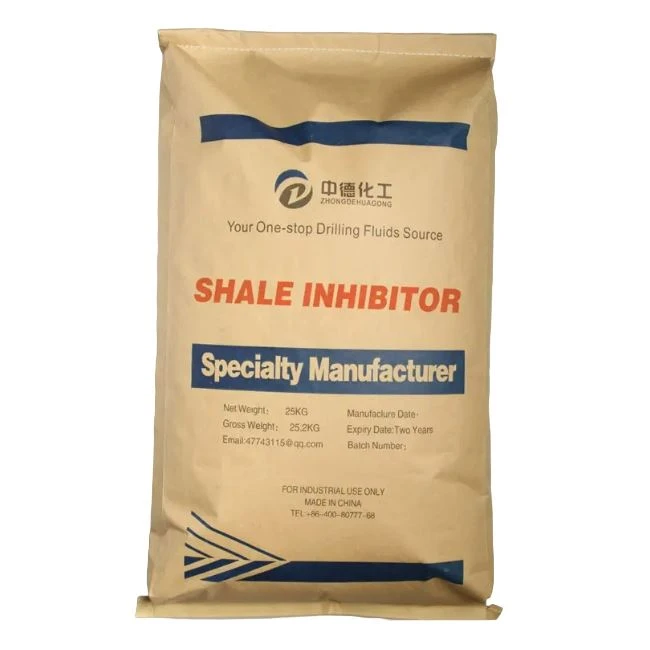
We, as a strong coating agent supplier, offer a wide range of products suitable for different gloss level requirements. You can check out our Drilling Fluid for Shale Inhibitor, Drilling Fluid for Shale Coating Agent, and Sand Carrying Thickener for Oil Drilling. These products can be adjusted to different gloss levels according to your specific needs.
Contact for Purchase and Consultation
If you're interested in our strong coating agents or have any questions about adjusting the gloss level, feel free to contact us. We're always here to help you find the right product and provide you with the best solutions for your projects.
References
- Paint and Coating Technology Handbook.
- Surface Coatings: Science and Technology by P. K. T. Oldring.