

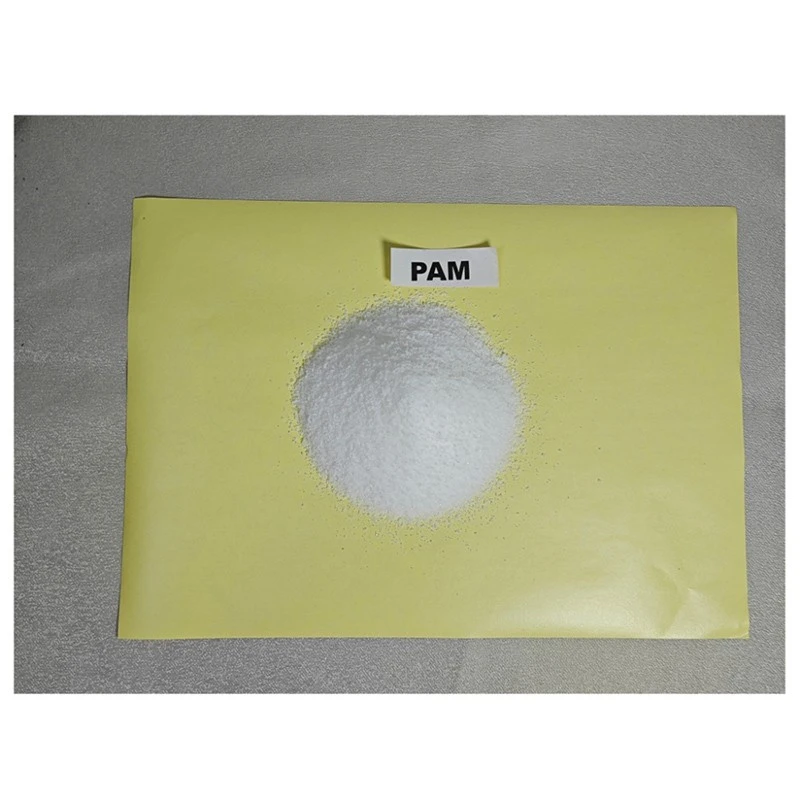
Polyacrylamide (PAM) is a versatile polymer widely used in various industries due to its unique properties. As a PAM supplier, I've witnessed firsthand the diverse applications of this remarkable substance, from water treatment to enhanced oil recovery. One area that has piqued my interest is how PAM interacts with bacteria in water. This interaction is not only crucial for understanding the environmental impact of PAM but also has significant implications for water treatment processes.
1. Chemical Structure and Properties of PAM
PAM is a synthetic polymer composed of acrylamide monomers. It can be classified into three main types based on its charge: anionic, cationic, and non - ionic. Anionic PAM has negatively charged functional groups, cationic PAM has positively charged groups, and non - ionic PAM has no net charge. These different charge characteristics give PAM a wide range of applications. For example, anionic PAM is commonly used in water treatment to remove suspended solids, while cationic PAM is more suitable for sludge dewatering.
The unique properties of PAM, such as its high molecular weight and ability to form hydrogen bonds, make it an excellent flocculant. When added to water, PAM molecules can adsorb onto the surface of suspended particles, including bacteria, and bridge these particles together to form larger flocs. This process, known as flocculation, helps in the separation of solids from water. You can learn more about the excellent flocculation performance of PAM at Excellent Polymer Flocculant.

2. Interaction Mechanisms between PAM and Bacteria
2.1 Physical Adsorption
One of the primary ways PAM interacts with bacteria is through physical adsorption. Bacteria have a negatively charged cell surface due to the presence of various functional groups such as carboxyl and phosphate groups. Cationic PAM, with its positively charged groups, can electrostatically attract the negatively charged bacteria. This attraction leads to the attachment of PAM molecules to the bacterial cell surface.
Anionic PAM can also adsorb onto bacteria, although the mechanism is different. It may interact with bacteria through hydrogen bonding or hydrophobic interactions. For example, some hydrophobic regions on the bacterial cell wall may interact with the hydrophobic parts of the PAM molecule. Non - ionic PAM mainly relies on hydrogen bonding and van der Waals forces for adsorption onto bacteria.
2.2 Flocculation and Aggregation
Once PAM is adsorbed onto the bacteria, it can cause flocculation and aggregation. The long - chain structure of PAM allows it to bridge between different bacteria, forming larger flocs. These flocs are easier to settle or filter out from the water. In water treatment plants, this is a crucial step for removing bacteria and other suspended solids. By promoting the formation of flocs, PAM can significantly improve the efficiency of sedimentation and filtration processes.
2.3 Impact on Bacterial Metabolism
The interaction between PAM and bacteria can also affect bacterial metabolism. Some studies have shown that high concentrations of PAM may inhibit bacterial growth. This could be due to several reasons. Firstly, the adsorption of PAM onto the bacterial cell surface may block the uptake of nutrients. PAM molecules may cover the transport proteins on the cell membrane, preventing the entry of essential nutrients into the cell.
Secondly, PAM may change the physical environment around the bacteria. For example, the formation of flocs can limit the diffusion of oxygen and other dissolved substances, creating a micro - environment that is less favorable for bacterial growth. However, at low concentrations, PAM may have little or no effect on bacterial metabolism, or in some cases, it may even promote bacterial growth by providing a surface for bacteria to attach and form biofilms.
3. Applications in Water Treatment
3.1 Drinking Water Treatment
In drinking water treatment, PAM is used to remove bacteria and other contaminants. By promoting flocculation, PAM helps in the removal of bacteria during the sedimentation and filtration processes. This reduces the microbial load in the water, making it safer for consumption. The use of PAM in drinking water treatment is strictly regulated to ensure that the residual PAM in the treated water is within safe limits.
3.2 Wastewater Treatment
In wastewater treatment, PAM plays a vital role in the removal of bacteria and organic matter. It can be used in both primary and secondary treatment processes. In primary treatment, PAM helps in the settling of suspended solids, including bacteria, in the sedimentation tanks. In secondary treatment, which involves biological processes, PAM can be used to enhance the separation of activated sludge from the treated water. For more information on the use of PAM in specific applications like drilling mud, you can visit Drilling Mud Polyacrylamide PAM.
3.3 Industrial Water Treatment
In industrial water treatment, PAM is used to control bacterial growth and prevent biofouling. Biofouling, which is the accumulation of microorganisms on surfaces, can cause problems such as reduced heat transfer efficiency in cooling systems and clogging of pipes. By interacting with bacteria and promoting their removal, PAM can help in maintaining the efficiency of industrial water systems. Chemical powder coating suspension agent PAM also has its unique applications in industrial processes, and you can find more details at Chemical Powder Coating Suspension Agent PAM.
4. Environmental Considerations
The interaction between PAM and bacteria also has environmental implications. When PAM is released into the environment, its interaction with bacteria can affect the ecological balance. For example, if PAM inhibits the growth of beneficial bacteria in natural water bodies, it may disrupt the food chain and nutrient cycling processes.
On the other hand, PAM can also be used to remediate contaminated water bodies. By promoting the removal of bacteria that are carrying pollutants, PAM can help in reducing the pollution levels in the environment. However, it is essential to use PAM in a responsible manner to minimize its potential negative impacts.
5. Conclusion and Call to Action
In conclusion, the interaction between polyacrylamide PAM and bacteria in water is a complex process that involves physical adsorption, flocculation, and impacts on bacterial metabolism. Understanding this interaction is crucial for optimizing the use of PAM in various water treatment applications.
As a PAM supplier, I am committed to providing high - quality PAM products that are effective and environmentally friendly. If you are interested in learning more about our PAM products or have specific requirements for your water treatment processes, I encourage you to reach out to us for a detailed discussion. We can work together to find the best PAM solution for your needs.
References
- Gregory, J. (1989). Coagulation and flocculation: theory and practice. Water Research, 23(5), 599 - 613.
- Liu, Y., & Fang, H. H. (2003). Effects of polyacrylamide on the performance of anaerobic digestion of waste activated sludge. Water Research, 37(17), 4213 - 4220.
- Sheng, G. P., Yu, H. Q., & Li, X. D. (2010). Extracellular polymeric substances (EPS) of microbial aggregates in biological wastewater treatment systems: a review. Biotechnology Advances, 28(6), 882 - 894.