

How does a polymer coating agent work?
As a seasoned supplier of polymer coating agents, I've delved deep into the science and practical applications of these remarkable substances. Polymer coating agents are widely used across various industries, from oil and gas drilling to manufacturing and construction. In this blog, I'll explore how polymer coating agents work, their key mechanisms, and the benefits they offer.
Understanding Polymer Coating Agents
Polymer coating agents are formulated from polymers, which are large molecules made up of repeating subunits. These polymers can be natural or synthetic, and they possess unique properties that make them suitable for coating applications. When applied to a surface, a polymer coating agent forms a protective layer that can enhance the surface's performance, durability, and functionality.
Mechanisms of Polymer Coating Agents
The effectiveness of a polymer coating agent lies in its ability to interact with the surface it is applied to and form a strong, cohesive layer. Here are some of the key mechanisms by which polymer coating agents work:
Adhesion
One of the primary functions of a polymer coating agent is to adhere to the surface. This adhesion is achieved through a combination of physical and chemical interactions. Physically, the polymer chains can penetrate the surface irregularities, creating a mechanical bond. Chemically, the polymer can form covalent or non - covalent bonds with the surface molecules. For example, in some cases, the polymer may have functional groups that can react with the surface, forming strong chemical bonds. This adhesion ensures that the coating stays in place and provides long - term protection.
Film Formation
Once the polymer coating agent is applied to the surface, it forms a continuous film. This film - forming process is crucial for the coating's performance. The polymer molecules spread out on the surface and gradually coalesce to form a uniform layer. The properties of the film, such as its thickness, density, and smoothness, depend on factors like the type of polymer, the application method, and the drying conditions. A well - formed film can act as a barrier, preventing the penetration of moisture, oxygen, chemicals, and other harmful substances.
Cross - linking
In many polymer coating agents, cross - linking is an important mechanism. Cross - linking involves the formation of chemical bonds between the polymer chains, creating a three - dimensional network structure. This network structure enhances the coating's mechanical properties, such as hardness, strength, and resistance to abrasion. Cross - linking can be induced by various means, including heat, radiation, or the addition of cross - linking agents. For example, in some epoxy - based polymer coating agents, a curing agent is added to initiate the cross - linking reaction, which hardens the coating over time.
Compatibility
Polymer coating agents need to be compatible with the surface they are applied to. Compatibility ensures that the coating adheres well and does not cause any adverse reactions. For instance, if a polymer coating agent is applied to a metal surface, it should not react with the metal in a way that causes corrosion or degradation. Compatibility also affects the appearance of the coating. A compatible coating will have a smooth, uniform finish, while an incompatible coating may exhibit cracking, peeling, or other defects.
Applications in the Oil and Gas Industry
In the oil and gas industry, polymer coating agents play a vital role in various drilling and production processes.
Drilling Fluid Additives
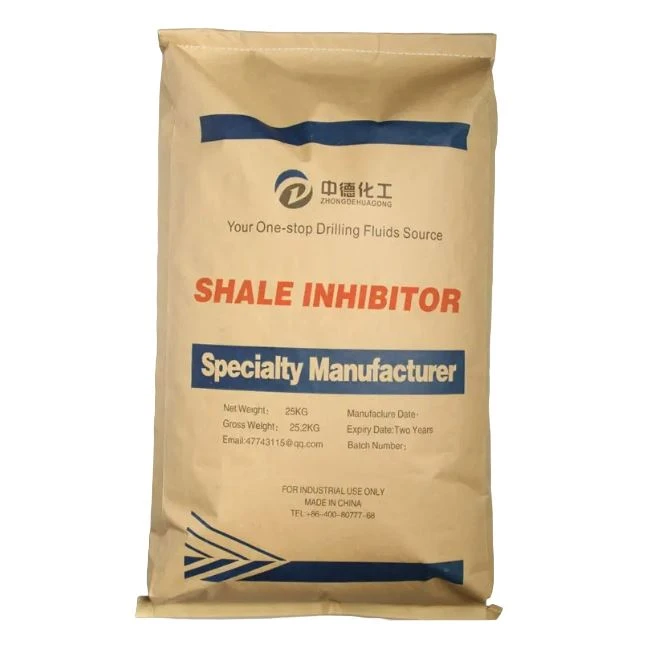
Polymer coating agents are commonly used as additives in drilling fluids. Drilling Fluid for Anti Collapse Agent helps to prevent the collapse of the wellbore by coating the shale formations. Shale is a soft and unstable rock that can easily swell and disintegrate when in contact with water - based drilling fluids. The polymer coating agent forms a protective layer on the shale surface, reducing the interaction between the shale and the drilling fluid. This not only stabilizes the wellbore but also improves the drilling efficiency.
Similarly, Drilling Fluid for Shale Coating Agent is designed specifically to coat the shale particles in the drilling fluid. This coating helps to keep the shale particles in suspension, preventing them from settling and causing blockages in the drilling equipment.
Sand Carrying and Thickening
In oil drilling operations, Sand Carrying Thickener for Oil Drilling is another important application of polymer coating agents. These agents can thicken the drilling fluid, increasing its ability to carry sand and other cuttings to the surface. The polymer coating on the sand particles reduces the friction between the particles and the fluid, allowing for more efficient sand removal. This helps to maintain the integrity of the wellbore and prevents damage to the drilling equipment.
Benefits of Polymer Coating Agents
The use of polymer coating agents offers numerous benefits across different industries:
Protection
As mentioned earlier, polymer coating agents can provide excellent protection against various environmental factors. They can protect surfaces from corrosion, abrasion, chemical attack, and weathering. In automotive applications, for example, polymer coatings can protect the car body from rust and scratches, extending the vehicle's lifespan.
Improved Performance
In industrial applications, polymer coating agents can enhance the performance of equipment and components. In the electronics industry, polymer coatings can provide insulation and protection against moisture, improving the reliability and performance of electronic devices.

Aesthetics
Polymer coating agents can also improve the appearance of surfaces. They can be formulated to have different colors, gloss levels, and finishes, allowing for customization. In architectural applications, polymer coatings can be used to give buildings a modern and appealing look.
Contact for Purchase and Consultation
If you're interested in learning more about our polymer coating agents or are looking to make a purchase, we're here to help. Our team of experts has extensive knowledge and experience in the field, and we can provide you with tailored solutions to meet your specific needs. Whether you're in the oil and gas industry, manufacturing, construction, or any other sector that can benefit from polymer coating agents, we invite you to reach out to us.
References
- "Polymer Coatings: Principles, Performance, and Applications" by Zeno W. Wicks Jr., Frank N. Jones, and S. Peter Pappas.
- "Handbook of Organic Coatings: Science and Technology" by Paul K. T. Oldring.
- Research papers on polymer chemistry and coating technology from journals such as "Progress in Organic Coatings" and "Journal of Coatings Technology and Research".