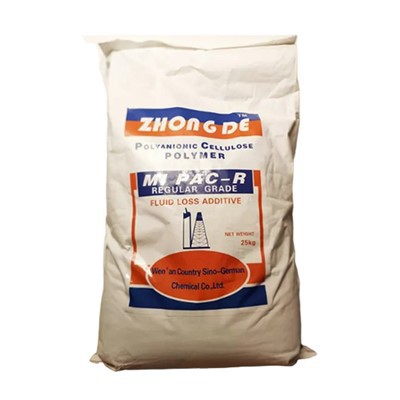
Low viscosity polyanionic cellulose
|
Project |
Technical indexes ofdrilling mud |
||
|
PAC-LV |
PAC-R |
PAV-HV |
|
|
API fluid loss reduction |
<16 |
<22 |
<23 |
|
water content |
<10 |
<10 |
<10 |
|
viscosity |
<20 |
≥45 |
≥50 |
Low viscosity polyanionic cellulose is derived from natural cellulose and is the main structural component of plants. Cellulose is a long-chain polymer made up of glucose units. When cellulose is treated with alkali, it undergoes a process called mercerization, which produces sodium cellulose glycolate. This intermediate is then treated with monochloroacetic acid (MCA), which is used to introduce carboxymethyl groups into cellulose compounds to produce low-viscosity polyanionic cellulose.
The manufacturing of LV-PAC involves several steps, including chemical modification, neutralization, and drying. The final product is a white powder or granule that is highly soluble in water, making it ideal for a wide range of applications.
Low viscosity polyanionic cellulose has unique properties that make it an ideal additive for a variety of industries. It is used as a thickener and fluid loss control agent in drilling fluids in the oil and gas industry, and as a stabilizer and thickener in processed foods in the food industry. In the pharmaceutical industry, LV-PAC is used as a coating material for controlled drug release, as a thickener in topical creams, and as a binder in tablet formulations.
In recent years, LV-PAC has gained popularity as a sustainable alternative to other synthetic polymers. Its biodegradable and renewable nature makes it an eco-friendly option that can be used in a variety of industries. In addition, due to its low toxicity and biocompatibility, it has attracted great attention in the field of biomedical research.


Hot Tags: low viscosity polyanionic cellulose, China low viscosity polyanionic cellulose manufacturers, suppliers, factory, pac for medical devices, pac for bookbinding, pac for fuel cells, pac for drug delivery, pac for tree planting, pac for sludge treatment